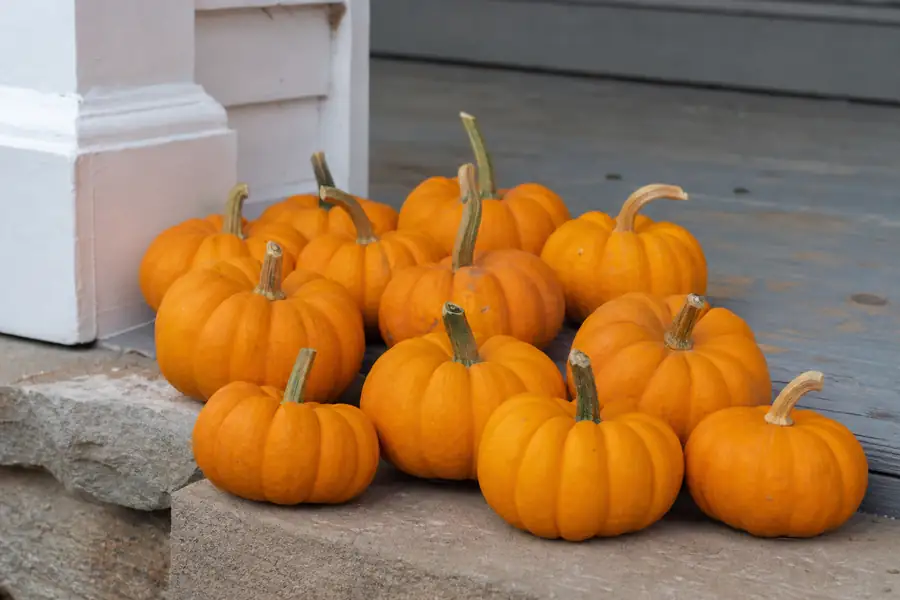
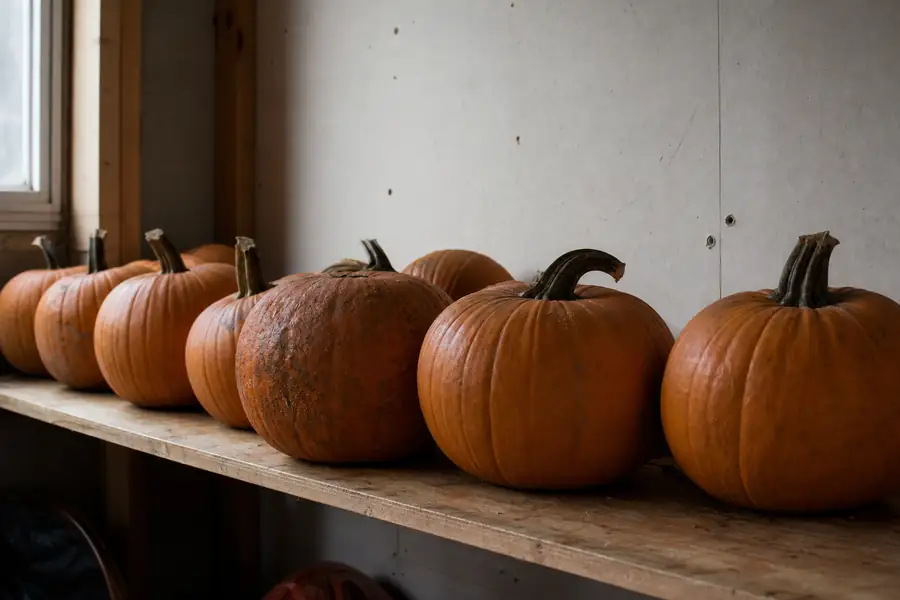
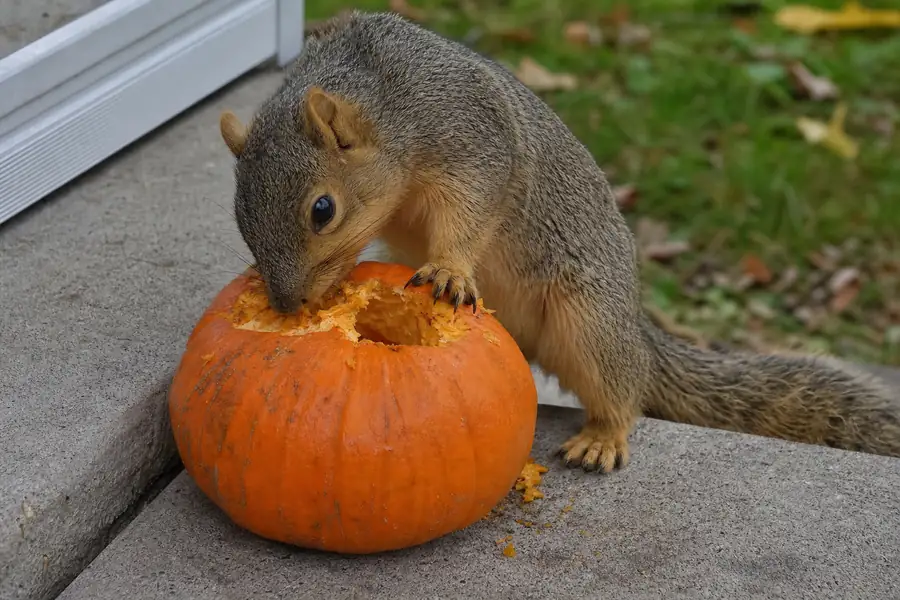
Quick answer: Pumpkins rot on a porch mostly from trapped moisture underneath and through a broken stem, not from cold. Raise every pumpkin at least half an inch off the deck or concrete on slate, brick or a cedar shim, keep sprinklers and downspouts off the display, and leave an inch of air between pumpkins. Do that and most hold up six to eight weeks on a Front Range porch. Skip it and the base goes soft in two to three weeks.
We've scraped enough rotted pumpkin off enough porches to know where it starts and how fast it spreads once it does. For the full breakdown of what shortens or extends that window, we wrote a separate piece on how long pumpkins last outside. This one is about the porch habits that keep yours out of that bottom range.
Where Porch Rot on a Pumpkin Starts
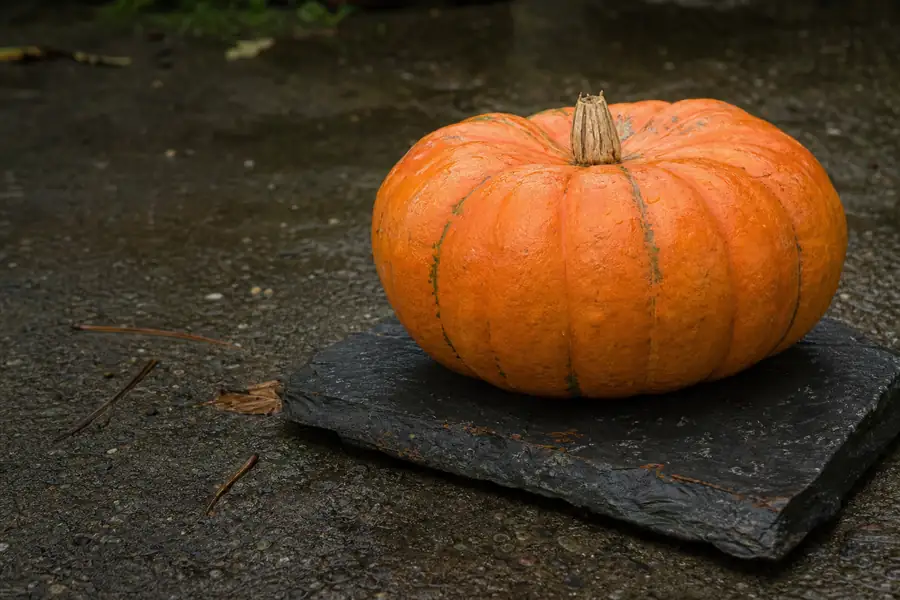
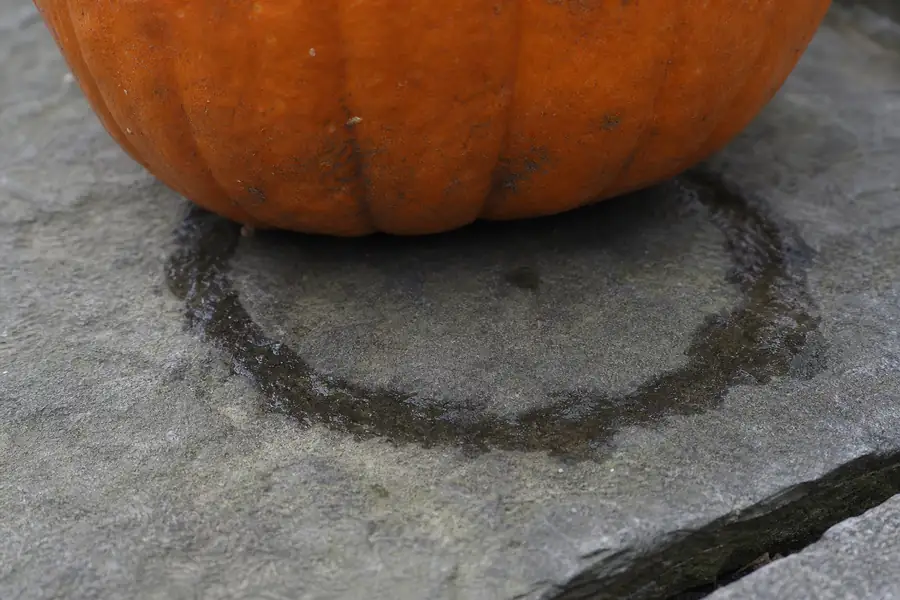
Pumpkin rot starts at the contact point underneath, where trapped moisture softens the skin and soft rot takes hold. A pumpkin sitting flat on any surface traps condensation overnight and whatever irrigation water runs under it during the day. The underside stays wet for hours longer than the top ever does, and once that skin softens, decay spreads through the flesh fast.
The second site is the stem. Once it cracks or gets twisted off, you've opened a direct path for mold on pumpkins to reach the interior. A pumpkin with a damaged stem can look fine on top for a week while it's already collapsing from the inside.
Concrete Versus Wood Versus Composite
Bare concrete and flagstone in full sun run hotter than the surrounding air by day and stay damp underneath from condensation at dawn, which is exactly the swing that speeds rot. Painted wood decking is nearly as bad: water sits in the gaps between boards and wicks up into anything resting flat on it. Composite decking is the mildest of the three, but a pumpkin sitting flush on it still traps moisture against the base.
We've pulled pumpkins off Colorado flagstone at the two-week mark and found the underside gray, slick, and already pitting, even when the rest of the pumpkin looked fine from the sidewalk. The fix doesn't change by surface: raise every pumpkin half an inch on a scrap of slate, a brick, or a cedar shim. That half inch of airspace is the single biggest thing that changes the outcome.
Water: Sprinklers and Overspray
Sprinkler overspray and downspout runoff end more pumpkin displays than a whole season of weather does. If an irrigation zone clips the front steps, move the display a few feet outside the spray arc or shut that zone off during the hours it runs. Downspouts are worse, since they dump a concentrated volume of water on one spot every time it rains.
Never hose pumpkins down to clean them off. It feels tidy, but it adds the exact moisture you're trying to keep away from the base.
Sun and Shade on a Colorado Porch
A west-facing porch can take four to six hours of hard afternoon sun, and the stronger UV above 5,000 feet scalds pale-skinned pumpkins first. White Ghost and Porcelain Doll pumpkins hold up longer in afternoon shade, where the thin white rind doesn't blister and split open an entry point for rot. Jarrahdale, with its tougher blue-gray rind, tolerates a full-sun porch without much trouble. We cover which varieties suit which spot in our pumpkin varieties guide if you're choosing before delivery.
Airflow Between Pumpkins
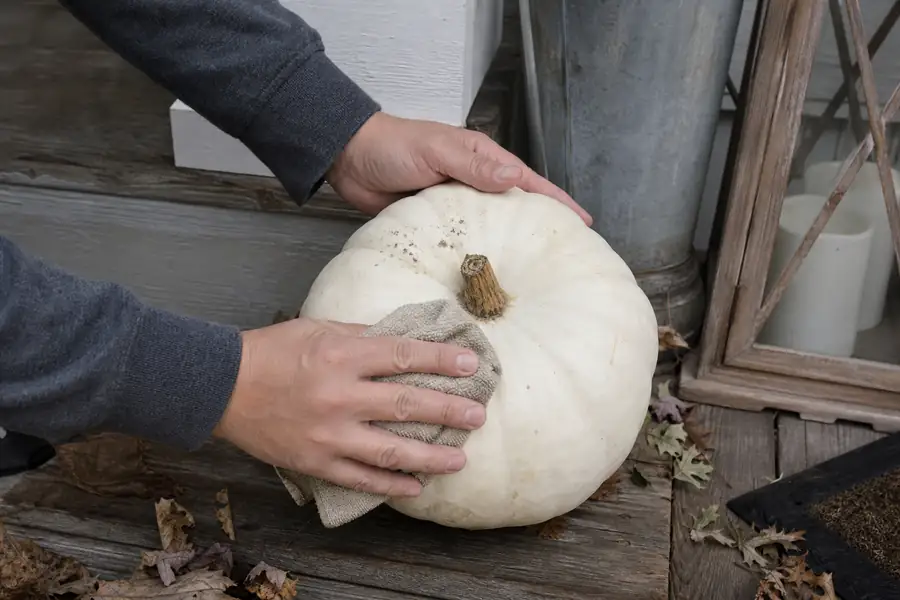
Good airflow keeps pumpkins drying out between wet spells instead of sitting damp. Leave at least an inch between each pumpkin and keep none touching the house wall, where moisture collects and rarely leaves. A wet leaf trapped between two pumpkins after a windy night will rot both of them at that contact point within days.
Rotate each pumpkin a quarter turn once a week. It's a small habit, but it keeps one side from sitting in shade and damp the whole season, and it matters just as much as keeping stems dry and intact in the first place.
The Bleach Question, Answered Honestly
A bleach solution, usually a tablespoon of household bleach per gallon of water wiped on the outside, may knock back surface mold and buy a pumpkin a few extra days of good looks. It does nothing for internal decay, and it will not save a pumpkin that already has a soft spot or a collapsed stem. The support for it is mostly anecdotal porch-decorating advice, not anything tested, so treat it as cosmetic maintenance, not prevention.
County extension offices that study pumpkin storage generally point to cool, dry conditions, holding fruit near 50 to 55 degrees Fahrenheit when possible, as doing more for longevity than any surface wipe. A porch in the shade in October usually gets you close to that range on its own.
Triage: What to Pull Today
Four signs mean a pumpkin needs to come off the porch now, not this weekend: a weeping or wet base, gray fuzz anywhere on the skin, a dent that stays when you press a thumb into it, and a stem that's gone soft or fallen off entirely. Leaving one in place doesn't just lose that pumpkin, it risks the ones touching it.
Pull it, bag it, and close the gap by sliding the display together rather than leaving a hole. If squirrels have already been at a weak spot, our piece on keeping squirrels off your pumpkins covers how to stop that damage from starting the rot in the first place.
What We Do on Install Day
A typical install runs about 90 minutes on site. We seat every pumpkin on a riser before it goes down, stake the taller ones against wind, and make sure nothing sits flat on wet stone or wet decking, no matter what the forecast says that week. It's the same process whether we're setting up in Boulder or out toward Longmont.
For a porch that needs real coverage, the Enchantment display, 30 to 35 pumpkins plus 2 hay bales, at $720, gives us enough pumpkins to space them properly and still fill the steps. A cramped display with everything touching is the fastest way to turn one soft pumpkin into five.
FAQs
What goes under pumpkins on a porch?
A thin riser, like a piece of slate, a brick, or a cedar shim, goes under each pumpkin to lift it about half an inch off the surface. That gap lets air move underneath and keeps condensation and irrigation water from sitting against the skin, which is the single biggest factor in porch rot.
Does bleach stop pumpkins from rotting?
A diluted bleach solution wiped on the outside can slow surface mold for a few days, but it does not stop internal decay or save a pumpkin that already has a soft spot. Think of it as light cosmetic upkeep, not a fix for rot that's already started.
Why is my pumpkin rotting from the bottom?
The underside traps moisture from condensation and runoff and stays wet far longer than the top, so that's almost always where soft rot starts first. Raising the pumpkin off the porch surface on a riser is the most effective single change to stop it.
Can pumpkins sit on concrete?
Pumpkins can sit on concrete, but bare concrete in full sun runs hot by day and stays damp underneath at dawn, which speeds up rot compared to other surfaces. Setting each pumpkin on a small riser instead of directly on the concrete solves most of the problem.