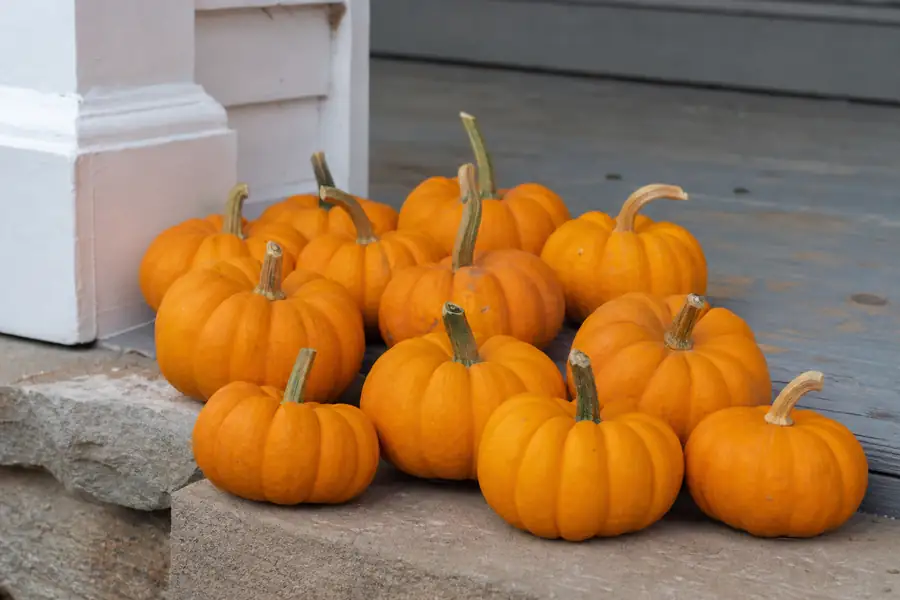
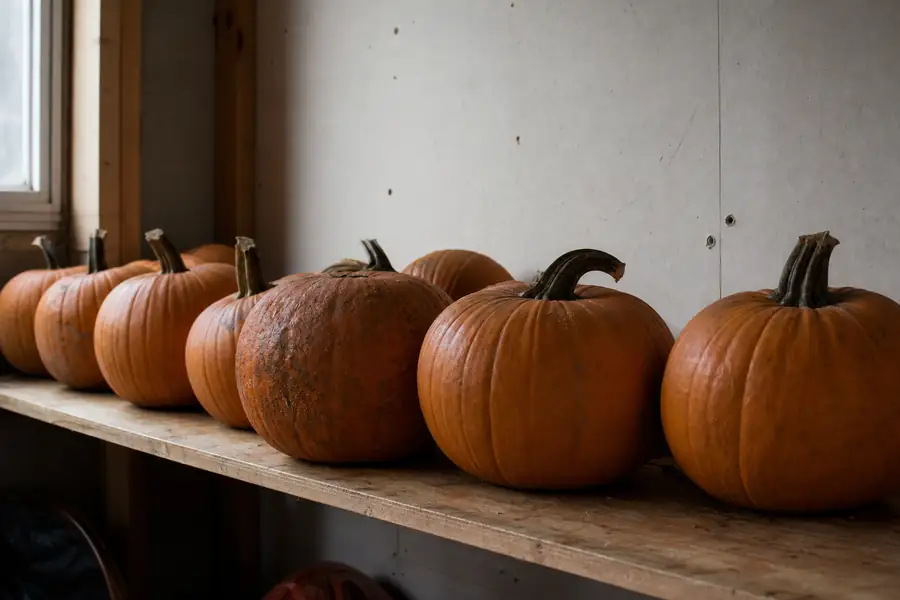
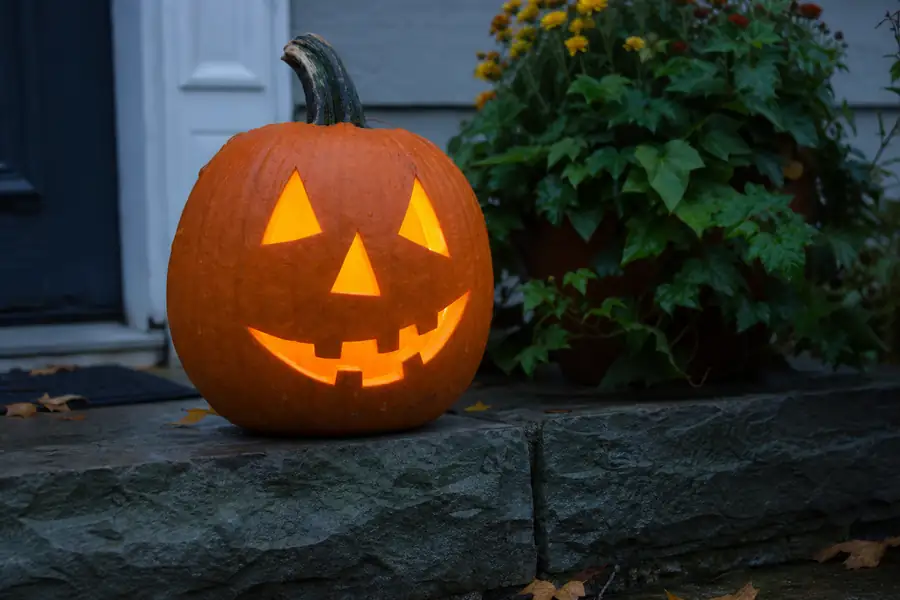
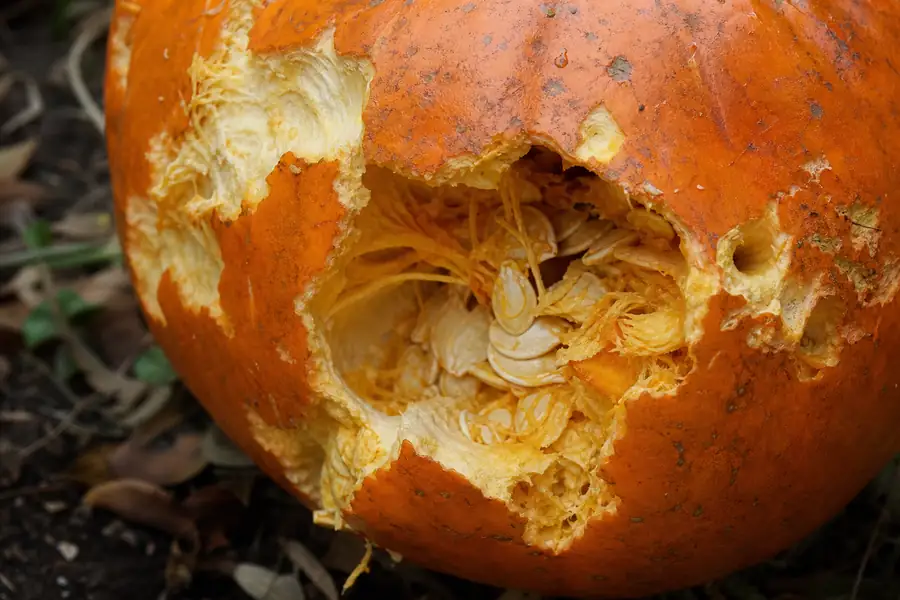
We get the 7 a.m. photo text most weeks in October: a fist-sized hole in the biggest pumpkin on the porch, seeds scattered across the step. It's almost always the same animal doing it, and there's a short list of things that actually slow it down and a longer list of things people try that don't.
Here's what we tell callers, ranked by what we've actually seen hold up on a Front Range porch.
- Leaving pumpkins uncarved as long as possible is the single best move and it costs nothing.
- A chewed pumpkin won't heal. Pull it fast before the smell draws more squirrels.
- Cayenne spray works on mammals but not birds, and needs weekly reapplication.
- Ultrasonic repellers and overnight scare tactics are weak or unproven.
- A bigger pumpkin count turns squirrel damage into a rotation problem instead of a ruined display.
Why Fox Squirrels Chew Porch Pumpkins
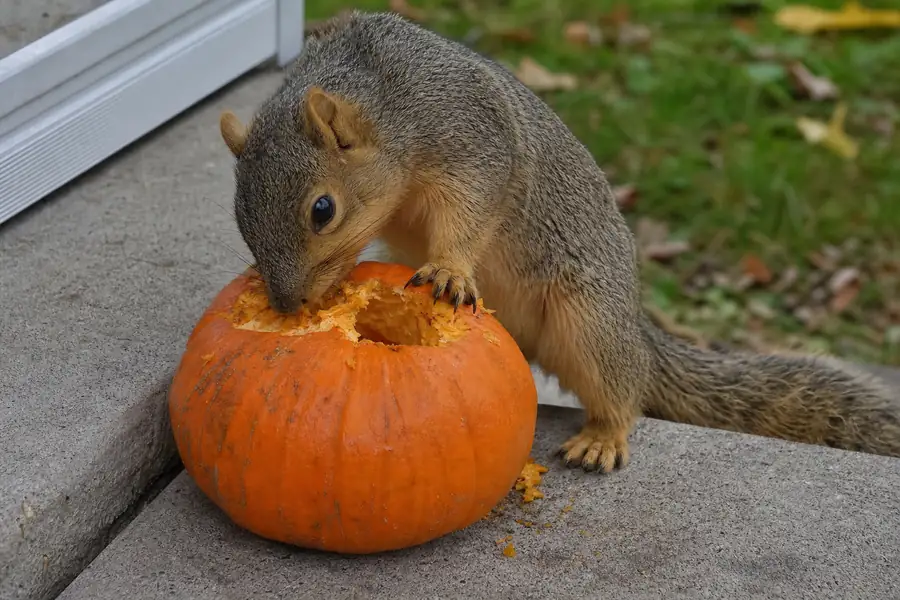
The fox squirrel is the common city squirrel across the Front Range, and it chews pumpkins for the seeds and moisture inside, not out of spite. Damage spikes in dry Septembers when natural water sources thin out, and it spikes again the moment a pumpkin gets cut open, because an opened pumpkin smells like food to every squirrel in range within a day.
You can usually tell who did the chewing by looking at the marks. Clean, low gnawing near the base points to rabbits or mice working at ground level. Ragged, torn bites higher up the pumpkin, especially near the stem, point to a squirrel.
Nine Squirrel Deterrents, Ranked by How Well They Work
We rank these from most reliable to least, based on what holds up on real porches through a Colorado October.
- Leave pumpkins uncarved until the last week of October. An unopened pumpkin doesn't smell like an open food source, so most squirrels pass it by. This is the best single move, and it's free.
- Move bird feeders and rake up fallen crabapples. Seed on the ground and dropped fruit bring squirrels onto the property, and a squirrel already working your lawn checks the porch next. Free and effective.
- Cayenne or capsaicin spray. Mammals have receptors that register capsaicin as a burning irritant, while birds don't, so a pepper spray deters squirrels without driving off feeder birds. Reapply weekly and after rain, and never spray a pumpkin you plan to cook or eat. Works, but it's upkeep.
- Motion-activated sprinkler. Reliable while it's running and still has water pressure. The catch: Front Range nights start dropping below freezing by mid October, and a frozen line defeats the whole system.
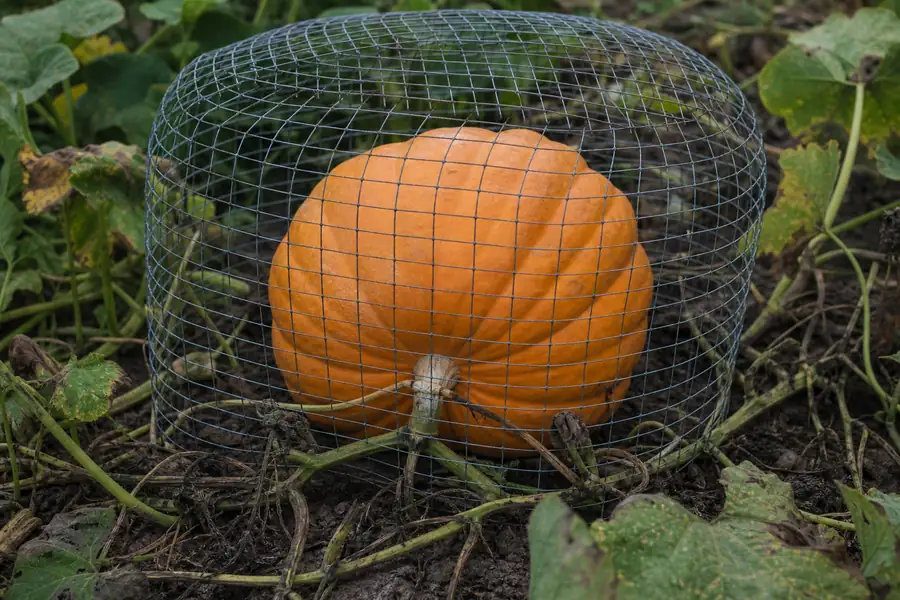
- Hardware cloth over one prized pumpkin. Hardware cloth is galvanized wire mesh you can cage over a pumpkin and pin to the ground. It's genuinely effective and it's ugly, so save it for the one pumpkin on the porch you can't afford to lose.
- Choose hard-skin varieties. Jarrahdale and Knucklehead pumpkins have tougher rinds than a soft pie pumpkin, and squirrels work them over less. Our pumpkin varieties field guide has the full rundown on which skins hold up best outdoors.
- A dog in the yard. Real, but partial. A squirrel will test the porch again the minute the dog goes back inside.
- Reflective tape and owl decoys. Fox squirrels learn fast, a behavior called habituation, and novelty scares that spook them the first day stop working within a week.
- Ultrasonic repellers. No reliable evidence these change squirrel behavior around a porch display. We'd skip this one.
What to Never Use Against Porch Squirrels
Poison bait, glue traps, and mothballs all have no place on a residential porch. Poison bait and glue traps risk killing songbirds and pets along with the squirrel, and mothballs are not labeled for outdoor pest use, so scattering them around pumpkins is off-label and puts a hazardous vapor near any dog or child on the steps.
If a squirrel problem gets bad enough that you're considering trapping or relocating an animal, check current Colorado Parks and Wildlife guidance first. Trapping and relocating wildlife is regulated, and the rules change, so their current guidance is the one to follow, not a general internet tip.
A Chewed Pumpkin Does Not Heal
Once a squirrel opens a pumpkin, the wound doesn't close back up. It softens, then rots, and the smell of a rotting pumpkin pulls in more squirrels, not fewer. The fix is simple: pull the damaged pumpkin off the porch the same day and rotate a spare into its spot. For more on how long a pumpkin holds up outdoors once it starts to go, our guide on how long pumpkins last outside covers the timeline.
Volume Is the Real Defense Against Squirrel Damage
On a small display, losing one pumpkin to a squirrel is the whole story. On a bigger one, it's a rotation problem, not a ruined display. An Enchantment display, 30 to 35 pumpkins plus 2 hay bales, at $720, can absorb a couple of chewed pumpkins without the porch looking picked over. Keep two or three spares in the garage near 50 to 55 degrees Fahrenheit so a swap takes five minutes, not a trip to the store.
We also keep minis out of the front row on porches in towns with heavy mature tree cover, like Boulder and parts of Longmont, since small pumpkins get carried off whole rather than just chewed. Bigger pumpkins stay put and take the bite marks instead.
FAQs
What smell do squirrels hate on pumpkins?
Squirrels avoid the burning sensation from capsaicin, the compound in cayenne and hot pepper sprays. A weekly spray of cayenne or capsaicin solution on the pumpkin's skin discourages chewing, though rain washes it off and it needs reapplying.
Does cayenne pepper keep squirrels off pumpkins?
Yes, for the most part, because mammals detect capsaicin as irritating while birds don't register it at all. It works best as part of a routine, reapplied weekly and after any rain, rather than a one-time spray.
Will squirrels eat uncarved pumpkins?
Squirrels chew uncarved pumpkins far less often than carved ones, since an unopened pumpkin doesn't smell like an accessible food source. Leaving pumpkins whole until the last week of October is the single most effective way to avoid squirrel damage.