Quick answer: Mini pumpkins typically last 4 to 8 weeks outdoors on a porch, or 8 to 12 weeks indoors if they were well cured and kept dry. That is roughly half the life of a full size field pumpkin, and nowhere close to a dense-skinned type like Jarrahdale, which can hold for several months in the right spot.
If you bought a dozen minis in September and they are already caving in while the big pumpkins on the same step look fine, that is not a bad batch. It is just what minis do. The question is not whether they will go first, it is when, and how many spares to have ready.
How long do mini pumpkins last?
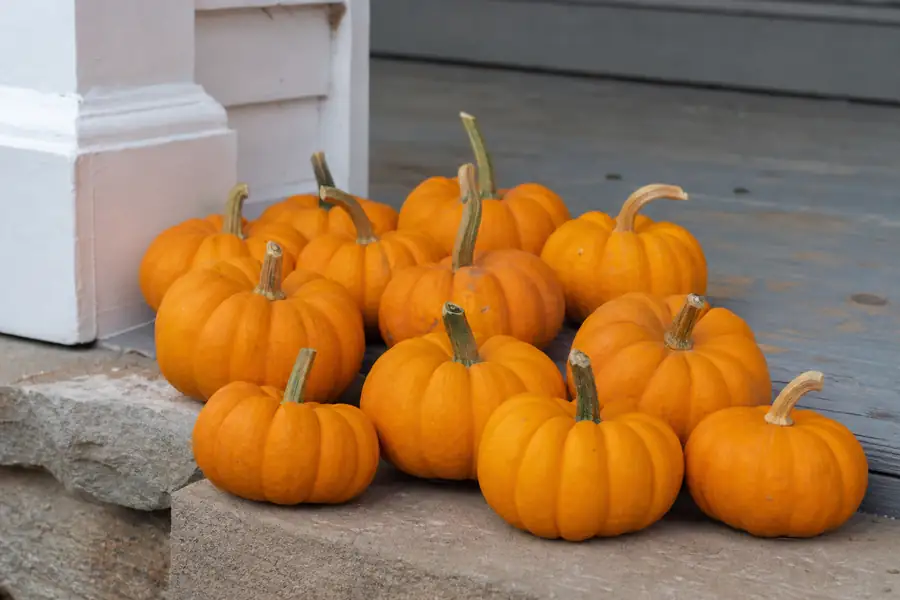
Mini pumpkin shelf life runs about 4 to 8 weeks outdoors and 8 to 12 weeks indoors, depending on curing and how much sun and moisture they catch. Jack Be Little, the small ribbed orange type, and Wee-B-Little, a similar orange mini, hold up a bit longer than Baby Boo, the white mini, which tends to yellow and soften first. For comparison, a standard 20 pound field pumpkin usually lasts 8 to 12 weeks outdoors, and a Jarrahdale with its thick blue-gray rind can go several months before it shows real trouble. That gap between a mini and a field pumpkin is normal, not a sign anything went wrong with the one you bought.
| Pumpkin type | Outdoor shelf life | Indoor shelf life | First sign of trouble |
|---|---|---|---|
| Jack Be Little / Wee-B-Little (mini, orange) | 4 to 8 weeks | 8 to 12 weeks | Shriveling at ribs |
| Baby Boo (mini, white) | 4 to 6 weeks | 6 to 10 weeks | Yellowing, then shriveling |
| Field pumpkin (20 lb, standard orange) | 8 to 12 weeks | 12 to 16 weeks | Soft stem scar |
| Jarrahdale (blue-gray, thick rind) | Several months | Several months | Dull, dented skin |
Our Colorado pumpkin varieties guide covers how these types differ in looks and use if you want the full lineup.
Why mini pumpkins go first
Minis go first because they have far more skin relative to their flesh than a large pumpkin does. A big pumpkin is mostly dense flesh wrapped in a modest amount of rind, so the rind holds moisture in for weeks. A mini is almost all rind with a thin layer of flesh underneath, so there is less flesh to buffer the inside from heat and less reserve to lose before the walls start to pull in. The stem scar is also proportionally larger on a mini, and that scar is where decay usually starts. Add thinner skin on top of that, and a mini simply has less built-in defense against sun and dry air than a jumbo pumpkin does.
Porch position makes mini pumpkin shelf life worse
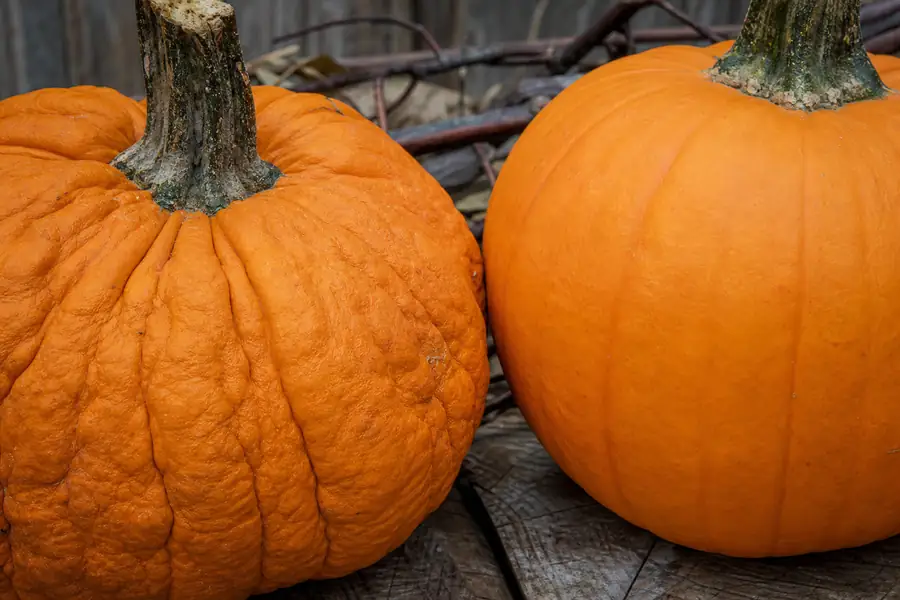
Where minis sit on the display usually shortens their life further. They almost always end up at the front edge of the step, which is also the spot that gets full afternoon sun and catches the sprinkler's arc on a porch in Longmont or Golden just like anywhere else on the Front Range. Front-row placement also means every kid who walks up the steps picks one up. Handling bruises thin skin, and a bruise is where softening and fuzz start a week or two later. If your minis are shriveling faster than the ones in the photos online, check whether they are getting more sun and more handling than the big pumpkins behind them, not whether they were a weak batch.
How to extend mini pumpkin shelf life
A few habits buy real weeks: buy minis with the stem still attached, since a pulled stem opens a path for rot. Set them on a shim, a piece of slate, or a dry board instead of directly on wet stone or concrete, which wicks moisture into the base. Afternoon shade helps more on a mini than on anything else in the display, because that thin skin heats up fast in direct sun at altitude. Bring them indoors on nights that drop below freezing, since a hard frost that a field pumpkin shrugs off can split a mini's skin. Our guide to frost and pumpkins has more on what a freeze actually does to the skin. Do not wash a mini and leave it wet, and hold off on heavy craft paint until late in the season, since a sealed paint layer traps moisture against skin that is already thin and gives decay nowhere to evaporate.
The replacement plan for mini pumpkins
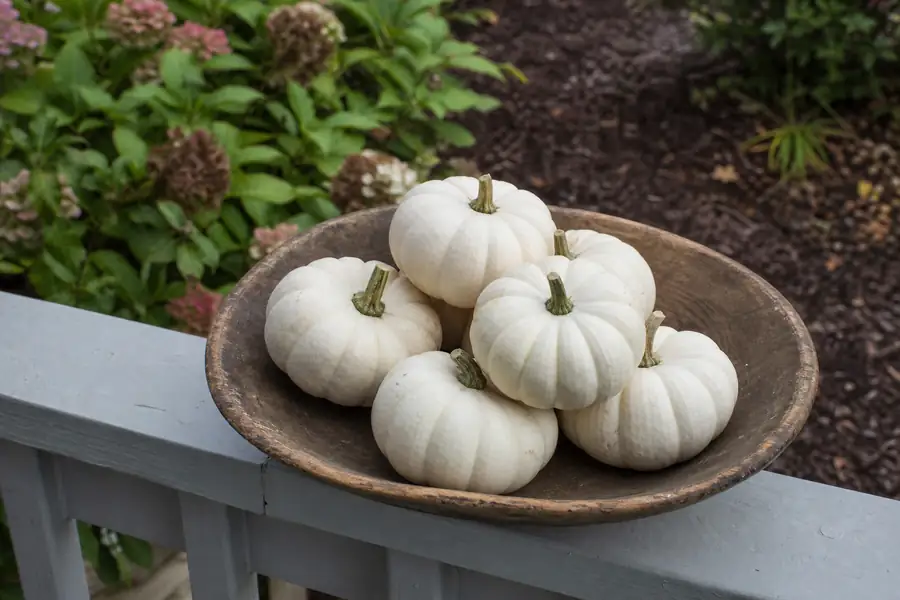
Plan on one mid-season swap for your minis, and buy 20 to 30 percent more than the display calls for so you have them on hand. Store the spares in a garage or unheated space near 50 to 55 degrees Fahrenheit, not touching each other, since contact points are where soft spots start first. In the Fairy Tale display, 50 to 60 pumpkins including 12 minis, at $1,225, the 12 minis are the pieces most likely to need swapping by mid-October, while the 2 jumbo Grand Prize pumpkins in that same package tend to hold all the way to Halloween. Minis are what we replace mid-season more than anything else, and we tuck fresh ones into the existing gaps rather than rebuild the display, so a swap takes minutes, not a redo. A field pumpkin on the same porch usually does not need this step at all, which is covered in our piece on how long pumpkins last outside.
When a mini pumpkin is done
Light wrinkling on a mini is cosmetic, not a failure sign, and it still reads fine from the sidewalk or the street. What means it is finished: a dent that stays under thumb pressure, a weeping or dark patch at the base, or any fuzz on the skin. Any one of those three means pull it that day, since a mini in that state will leak onto the step or the pumpkins next to it within a day or two. Wrinkled but firm can stay. Soft or fuzzy cannot.
FAQs
How long do mini pumpkins last?
Mini pumpkins typically last 4 to 8 weeks outdoors and 8 to 12 weeks indoors if they were well cured and kept dry. Jack Be Little and Wee-B-Little in orange tend to hold slightly longer than Baby Boo in white, which usually yellows and softens first.
Why are my mini pumpkins shriveling?
Shriveling happens because mini pumpkins have much more skin relative to their flesh than a large pumpkin, so they lose moisture faster in the same amount of time. Front-row porch placement in full sun, sprinkler spray, and frequent handling by visitors speed it up further. Light wrinkling alone is cosmetic and not a sign the pumpkin is failing.
Do painted mini pumpkins last longer?
No, painted minis usually last about the same or slightly less, because a heavy paint layer can seal moisture against already thin skin instead of letting it dry out evenly. If you plan to paint minis, do it close to when you will display them rather than weeks ahead, and expect the same 4 to 8 week outdoor window.
Should I buy extra mini pumpkins at the start of the season?
Yes, buying 20 to 30 percent more minis than your display needs is the easiest way to avoid a bare front row in mid-October. Store the spares somewhere cool and dry, around 50 to 55 degrees Fahrenheit, and swap in fresh ones as the originals soften.