Quick answer: A light frost, air temperatures dropping to around 33 to 36°F for a few hours, rarely damages a harvested pumpkin's flesh. A hard freeze below 28°F for several hours will soften the skin, cause sunken spots, and speed up rot within days. The difference matters a lot along the Front Range, where the first frost can show up in September in the foothills and closer to mid October down in Denver.
Pumpkins already picked and sitting on a porch behave differently than pumpkins still on the vine. Once cut, a pumpkin has no plant feeding it or protecting it, so its skin is the only barrier between the cold and the flesh underneath. That skin holds up fine against a brief chill but not against a hard, sustained freeze.
Does Frost Hurt Pumpkins Sitting on a Porch?
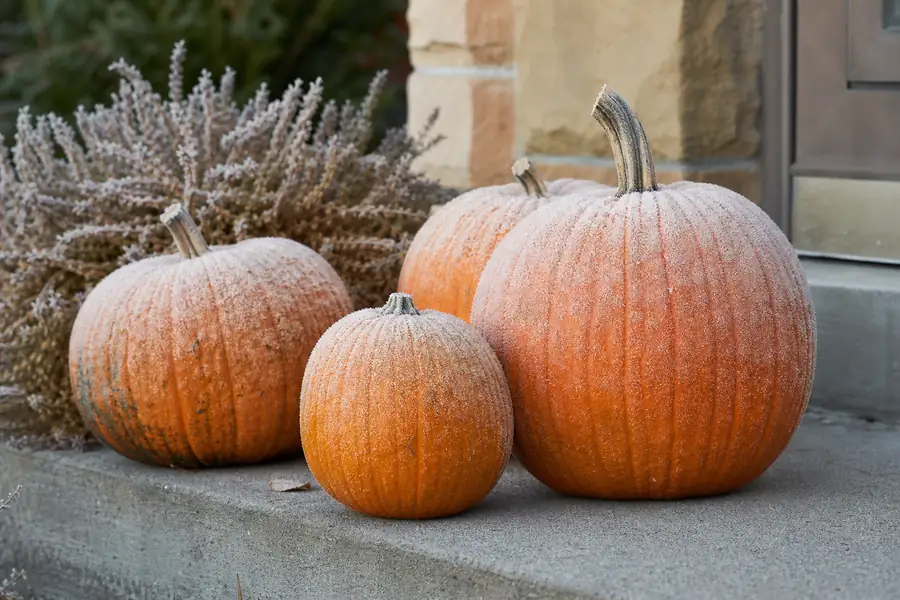
A light frost on a porch pumpkin usually causes no lasting harm at all. The pumpkin's thick rind sheds a quick overnight dip into the low 30s, and once the sun hits it in the morning, it looks exactly like it did the day before. This is the most common frost scenario on the northern Front Range, where clear autumn nights bring a fast temperature drop that reverses just as fast once the sun comes up.
Where it goes wrong is duration and depth. A pumpkin that sits below freezing for six or eight hours straight, which happens more in the foothills towns like Nederland and nearby Jamestown than down on the plains, takes real damage even if the low never gets that extreme. Cold that lingers does more harm than cold that hits hard and passes.
Light Frost vs Hard Freeze: What Each Actually Does
A light frost chills the skin without freezing the water inside the pumpkin's cells, so the fruit bounces back once temperatures rise. A hard freeze forms ice crystals inside those cells, which rupture the flesh from the inside and turn firm rind to mush as it thaws. That is the real mechanism behind frost damage, and it is why a pumpkin can look untouched the morning after a freeze and then collapse two or three days later.
| Condition | Typical temperature | What happens | What to do |
|---|---|---|---|
| Light frost | 33 to 36°F, brief | Surface chill, no lasting damage | Nothing needed |
| Moderate frost | 28 to 32°F, a few hours | Skin may soften slightly at contact points | Cover exposed pumpkins overnight |
| Hard freeze | Below 28°F, several hours | Cell walls rupture, soft spots and rot follow within days | Cover, or move under an overhang |
Carved pumpkins have almost no protection once the shell is cut open, so they suffer at temperatures whole pumpkins shrug off. If you have a jack-o-lantern on the steps alongside whole pumpkins, expect it to go soft first regardless of what the rest of the display does.
What to Do the Night Before a Frost
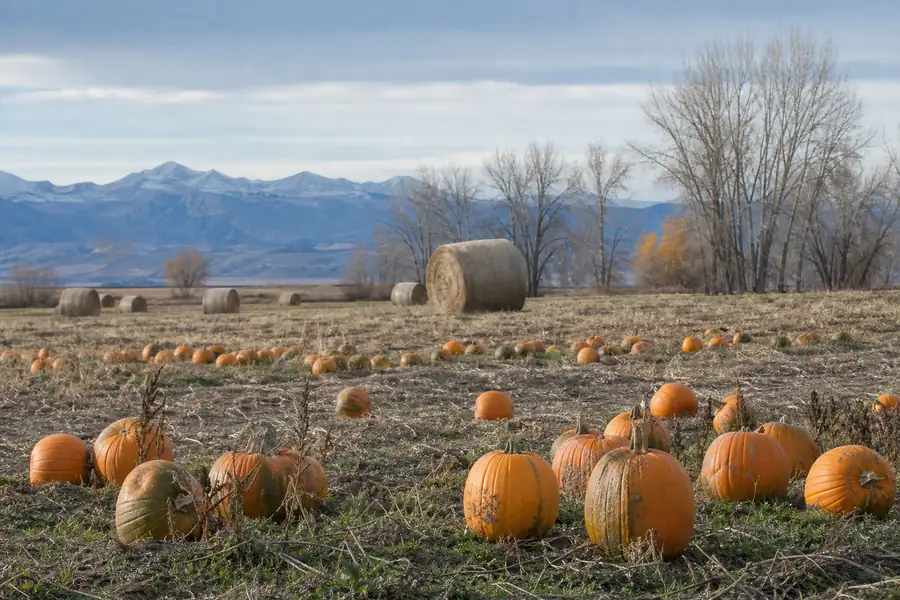
Cover exposed pumpkins with an old sheet, burlap, or a frost cloth before a hard freeze, and pull it off in the morning once the sun is up. A loose cover traps a few degrees of ground heat overnight, which is often the difference between a pumpkin that shrugs off a freeze and one that shows a soft bruise by the base a few days later. Do not use plastic sheeting directly against the pumpkin, since it can trap condensation against the rind.
Pull any pumpkins tucked against a cold, exposed railing or north-facing wall in a hard freeze if you can move them, and set them closer to the house where the porch holds a little more warmth. If your display already leans on hay bales or a windbreak, as ours often does with the Full package, that arrangement already blocks some of the wind chill that makes a freeze worse. Check the forecast the evening before, not the morning of. Front Range temperature drops after sunset can be sharp, and by the time frost is visible on the porch the damage that is going to happen has usually already started.
Signs of Frost Damage on Pumpkins
A frost-damaged pumpkin shows a water-soaked, translucent patch on the skin first, usually where it touched a cold surface directly, followed by a soft, sunken spot within a day or two. That soft spot is the tell. A pumpkin that looks fine the morning after a freeze but develops a mushy patch by the base a few days later took real cold damage, even if nothing was visible at first.
Once that soft spot shows up, it will spread and the pumpkin will not recover. The best move is to pull it from the display before it leaks onto the porch and set the rest of the group a little further apart so one going bad doesn't speed up its neighbors. For more on how long a healthy, undamaged pumpkin holds up on its own, our guide on how long pumpkins last outside covers the timeline in normal fall weather. And if you're planning a display around Colorado's swings between warm afternoons and hard overnight cold, we cover that seasonal pattern in our post on fall porch decor for Colorado weather.
We see this play out every fall from Boulder down to Longmont: a hard early freeze catches folks off guard more than the cold itself does. Knowing the difference between a frost you can ignore and a freeze worth covering for saves most displays.
FAQs
Can a pumpkin survive a hard freeze if I cover it?
Often yes, if the cover goes on before temperatures drop and comes off once the sun is up the next morning. A sheet or frost cloth traps enough ground warmth to keep the pumpkin's flesh from freezing solid, which is what actually causes the damage.
Will a frozen pumpkin still look okay the next day?
It might look completely normal at first. Frost and freeze damage often shows up two to three days later as a soft, sunken spot, so a pumpkin that survived overnight isn't necessarily in the clear.
Does an early frost mean the whole pumpkin season is ruined?
No. One cold night usually affects only pumpkins left uncovered in exposed spots, not an entire display, and most porch pumpkins handle several frosts over the course of a Colorado fall without any problem.
Do carved pumpkins freeze faster than whole ones?
Yes. Once a pumpkin is cut open, the exposed flesh has no rind protecting it, so a jack-o-lantern will show frost and freeze damage well before an uncarved pumpkin sitting right next to it.
What temperature should I start worrying about for my porch pumpkins?
Once the overnight forecast drops toward 28°F or lower for more than an hour or two, it is worth covering exposed pumpkins. Anything in the low to mid 30s for a short overnight dip typically causes no damage at all.