Quick answer: A squirrel-resistant pumpkin display combines a physical barrier (chicken wire staked around the base, pumpkins set on a stand instead of flat on the steps) with a scent or taste squirrels avoid, like cayenne pepper or a peppermint spray reapplied after rain. Nothing keeps squirrels off pumpkins for a full ten weeks with zero maintenance, but stacking two or three of these methods cuts the damage down to a few test nibbles instead of a hollowed-out shell.
Front Range squirrels go after pumpkins for the water and seeds inside, not because they're desperate for a meal. A dry stretch in September pushes them toward anything soft and orange sitting at ground level. Once one squirrel finds a soft spot near the stem, others usually follow within a day or two.
What keeps them off one porch and not the next porch over usually comes down to three things: how close the pumpkins sit to trees or a fence line squirrels already use, whether the display is at ground level or raised, and how determined the local population happens to be that particular fall. A porch backed up to open space or a greenbelt gets more traffic than one surrounded by pavement.
What Actually Keeps Squirrels Off Pumpkins
The methods that hold up on a Front Range porch layer a physical barrier with a scent squirrels find unpleasant, rather than relying on one trick alone.
| Method | How well it works | Notes |
|---|---|---|
| Cayenne pepper dusted on the skin | Good, short term | Reapply after rain or after watering nearby plants |
| Peppermint oil spray | Moderate | Wears off in a few days, easy to redo |
| Chicken wire staked around the base | Good | Best for pumpkins set right on the steps |
| Raising pumpkins on a stand or hay bale | Good | Fewer easy footholds than ground level |
| Petroleum jelly on the skin | Weak | Melts and smears in strong Colorado sun |
The stand and the chicken wire matter more than people expect. A squirrel that has to climb and balance to reach a pumpkin gives up faster than one that can walk right up and start gnawing.
What Doesn't Work to Keep Squirrels Off Pumpkins
Aluminum foil wrapped around the base does not keep squirrels off pumpkins for more than a day or two. They chew through it or just push it aside, and it looks bad on a porch anyway.
A few other common fixes fall short in real Front Range conditions:
- Fake owls or rubber snakes: squirrels get used to a stationary object within a day
- Mothballs: they don't reliably repel squirrels and are toxic to pets, so skip this one entirely
- Carving early: an open pumpkin softens fast and draws more animals, not fewer, and shortens how long the whole display lasts
- Bleach spray: doesn't deter squirrels and can bleach porch paint and stone
If a pumpkin does get hollowed out, it's usually a sign the display sat too close to a fence, tree, or shed squirrels already travel along. Moving next year's display even a few feet from that path helps more than any spray. For more on how long an intact pumpkin holds up outdoors, see our guide on how long pumpkins last outside.
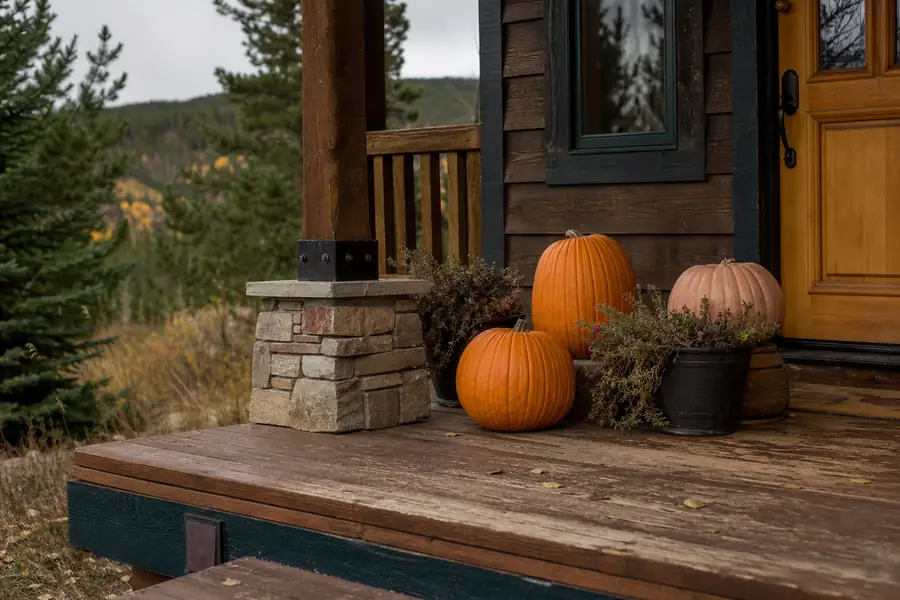
Magpies and Bears: Other Front Range Porch Raiders
Magpies peck at soft spots on a pumpkin the same way squirrels gnaw at the stem, going after moisture more than food. A magpie mark usually looks like a shallow, ragged hole rather than the cleaner gouge a squirrel leaves near the top.
In canyon towns like Nederland and Jamestown, a bear moving through before den season will knock over anything sweet-smelling left on a porch, pumpkins included. Bringing the display in overnight isn't practical once it's staged, so the more realistic move up canyon is keeping pumpkins away from trash cans, bird feeders, or anything else that's already drawing wildlife to the property.
How We Protect the Pumpkins We Deliver
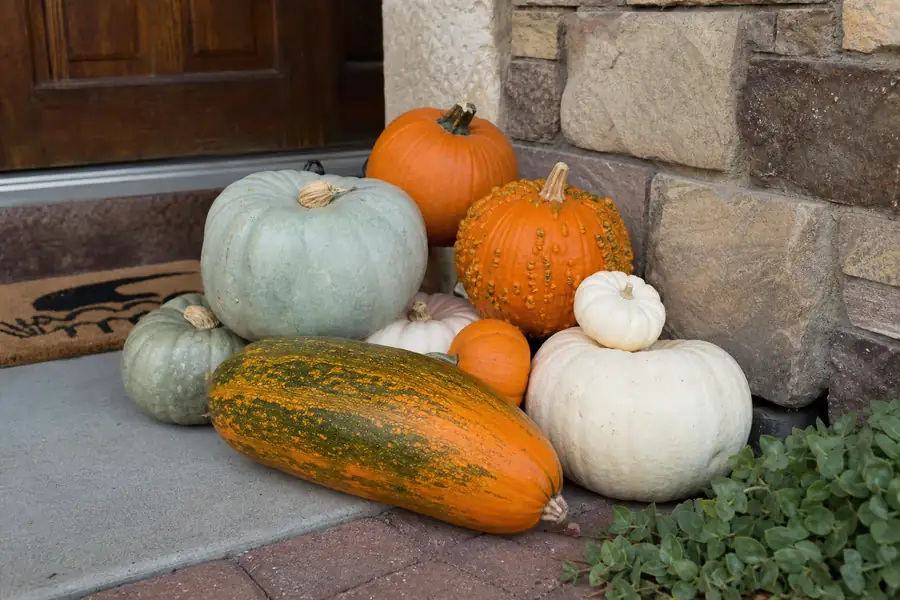
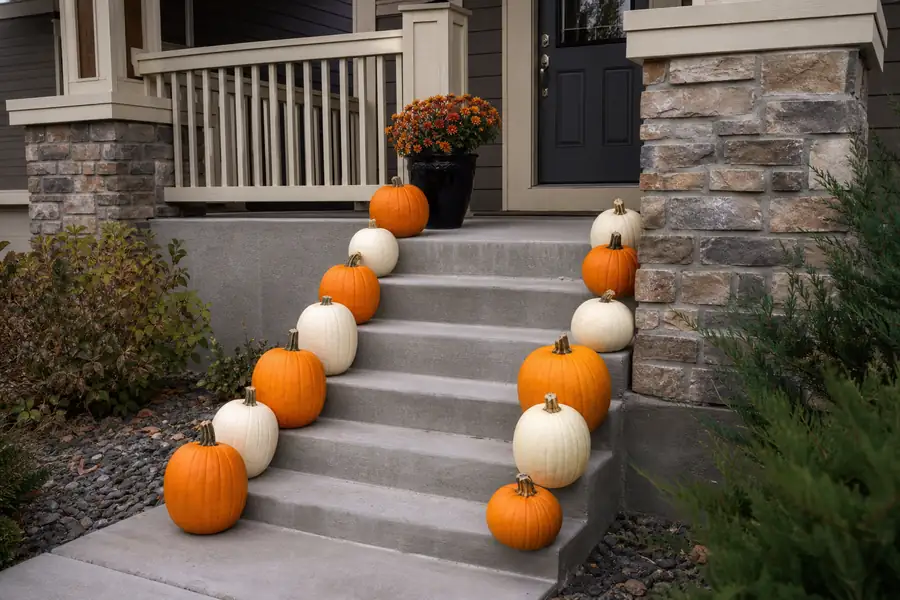
We stagger pumpkins across a porch instead of piling them in one mound, which limits how much damage a single squirrel visit does to the whole display. Smaller pumpkins go toward the back or on a stand, and the largest ones anchor the front where they're easiest to check on.
A Full package gives you enough pumpkins that a nibble or two on one doesn't wreck the look of the whole porch, which matters more than any single deterrent. We serve porches across Boulder and the surrounding towns, and we're happy to talk through placement when we deliver if squirrels have been a problem at your address before.
We don't offer a squirrel damage warranty. An outdoor pumpkin display is exposed to weather and wildlife by nature, and that's part of what you're signing up for with a real porch full of real pumpkins instead of plastic ones.
FAQs
Do squirrels actually eat pumpkins, or just chew them?
Squirrels do eat pumpkin flesh and seeds, but most of the damage on a porch is exploratory chewing near the stem where the pumpkin is softest. A pumpkin can survive several small squirrel visits and still look fine from the street.
Does spraying pumpkins with vinegar keep squirrels away?
Vinegar has a weak, short-lived effect at best and washes off in the first rain or sprinkler run. Cayenne pepper and peppermint oil hold up better over a Colorado fall and are easier to reapply.
Will a fake predator like an owl decoy help?
Not for long. Squirrels figure out within a day or two that a stationary decoy never moves, and it stops working as a deterrent once they do.
Should I worry about bears going after porch pumpkins?
In canyon communities like Nederland and Jamestown it's worth keeping pumpkins away from trash and bird feeders that already attract bears. On the plains and in the metro area, squirrels and magpies are the more common concern.
Is there any way to fully squirrel-proof a pumpkin display?
Not for an entire season without daily upkeep. Combining a raised stand or chicken wire barrier with a reapplied scent deterrent gets a display close to squirrel-proof for most of October, which is the realistic goal.