Quick answer: Wash and dry the pumpkin, wipe the skin with rubbing alcohol or vinegar water, and wait ten minutes before any brush touches it. Skip that and even good acrylic paint will come off in sheets by the time a kid carries it up the steps.
We style real pumpkins on real porches all over Boulder County, and we paint far more of them than we carve. Paint survives being handled by siblings, dogs, and trick-or-treaters. A carved pumpkin does not.
- Acrylic craft paint is the default choice for most families: cheap, forgiving, and it dries fast.
- The skin has a waxy coating that paint cannot grip until you strip it off first.
- Oil based paint pens are the lowest mess option for kids five and up.
- Sealing is optional and never makes a pumpkin weatherproof, just a little more handle resistant.
- A flat, pale pumpkin like White Ghost (Lumina) shows kid artwork better than a ribbed one.
Why Pumpkin Paint Slides Off
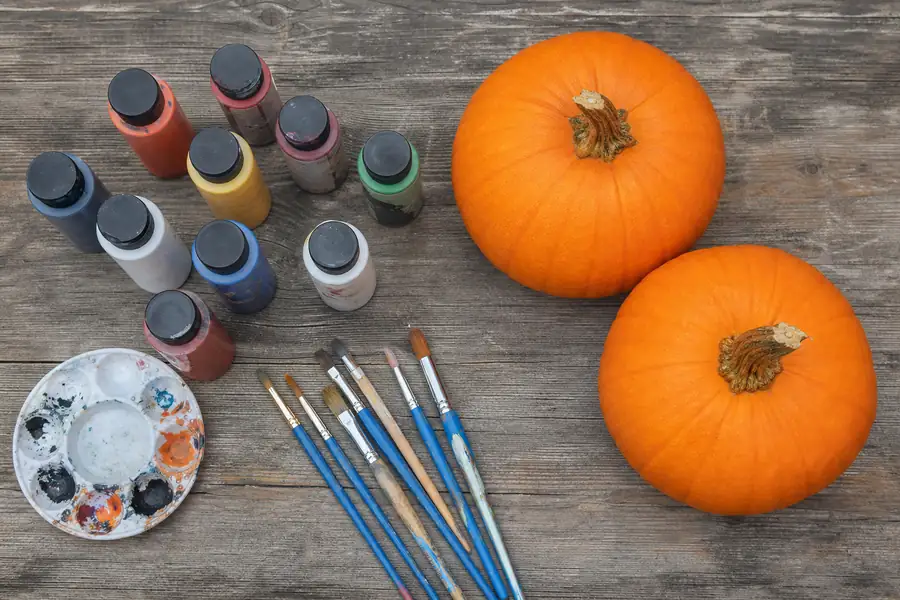
Pumpkin skin carries a waxy cuticle, the same film that makes a fresh pumpkin look slightly shiny. Paint beads on top of that wax instead of bonding to it, which is why a pumpkin that looked finished on Saturday is peeling by Tuesday.
Wash the pumpkin in warm water first, then dry it completely. A damp pumpkin holds paint even worse than a waxy one. Once it is dry, wipe the whole surface with rubbing alcohol or a vinegar and water mix on a paper towel, then let it sit for ten minutes before anyone picks up a brush. That wait matters. Skipping it is the single most common reason painted pumpkins fail.
What Paint Actually Sticks to a Pumpkin
Acrylic craft paint is the best paint for pumpkins for most families: it is cheap, washable off skin and clothes while wet, and it covers in one or two coats. Chalk paint grips the hardest of any option and needs no primer at all, but it costs more and dries with a flatter finish that some kids find chalky looking.
| Paint type | Adhesion | Mess level | Best for |
|---|---|---|---|
| Acrylic craft paint | Good | Medium | Most ages |
| Chalk paint | Best, no primer | Low-Medium | Older kids, adults |
| Washable tempera or poster paint | Poor, rubs off within a day | High | Not recommended |
| Oil based paint pens | Good on dry skin | Low | Ages 5 and up |
| Spray primer plus acrylic | Best durability | Low (adult applied) | Display pumpkins, parties |
Washable tempera and poster paint are the ones that fail. They sit on the wax layer and transfer to hands, clothes, and porch railings within a day, especially once the pumpkin starts sweating a little in the sun. Oil based paint pens are the lowest mess option on this list: no cups, no spills, and they dry touch safe in 10 to 15 minutes. An adult applied spray primer underneath acrylic is the most durable base we use on pumpkins that need to hold up through a whole season of being picked up and set back down.
Drying Time and Sealing a Painted Pumpkin
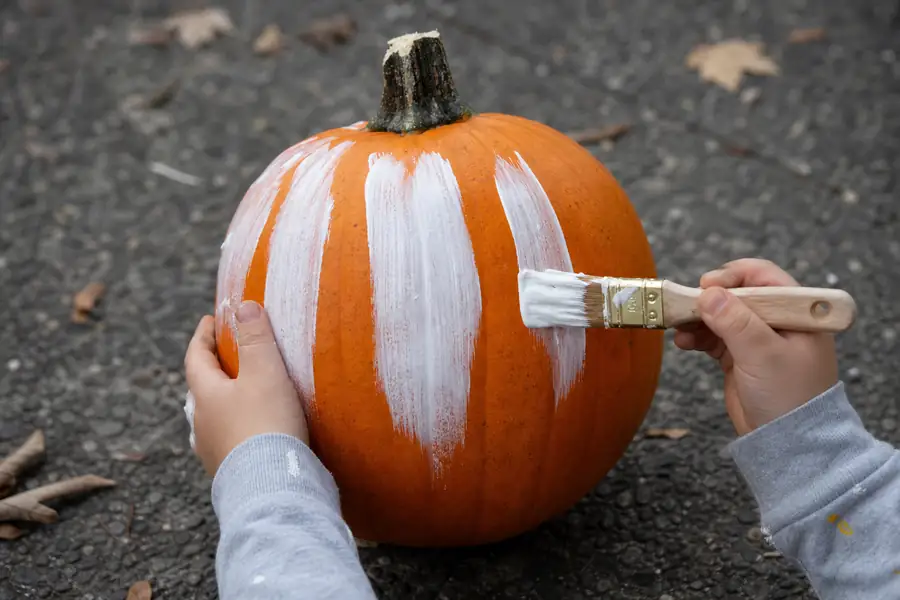
Acrylic paint on a pumpkin is touch dry in 20 to 30 minutes, safe to handle without smearing after about an hour, and fully cured within 24 hours. Cured means the paint has hardened all the way through, not just on the surface, so it resists fingerprints and light bumps.
Sealing a painted pumpkin is optional, and it only buys a little extra scuff resistance, never weatherproofing. If you want it, an adult should apply two light coats of a matte sealer outdoors, 15 to 20 minutes apart, after the paint has fully cured. Never seal a pumpkin anyone plans to carve into pie or roast the seeds from later. Sealer is not food safe.
Picking the Right Pumpkin for Painting
White Ghost, sold under the variety name Lumina, is chalk white with almost no ribbing, which means it holds fine detail and reads clearly from the sidewalk even at dusk. A medium orange field pumpkin is the forgiving, everyday choice: smooth enough for most designs and cheap enough that a mistake does not sting. Jarrahdale's deep ribs will pool paint into the grooves, which can ruin a straight line but works fine for anything meant to look textured. Knucklehead's warts break up any drawn line entirely, so save that variety for kids who want to paint the bumps themselves rather than a planned design. Our Colorado pumpkin varieties field guide covers what each type looks like before you buy.
If you want enough pumpkins for every kid at a painting party, counting one adult sized pumpkin per child adds up fast. The Charm package runs $375 for 18 to 20 pumpkins delivered and styled, which covers a decent size group with blank canvases to spare.
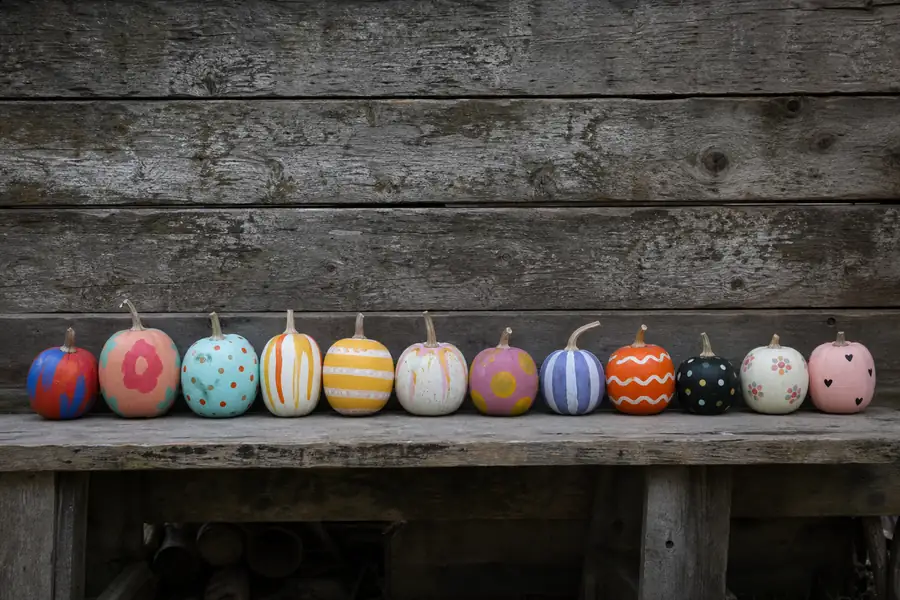
Fifteen Pumpkin Painting Ideas for Kids, by Age
Each of these finishes in one sitting, 10 to 30 minutes depending on age and fuss factor.
Ages 2 to 4:
- Handprint ghosts: white paint on a palm, pressed onto an orange or white pumpkin
- Dot marker faces: round washable dot markers for eyes, nose, mouth
- Finger painted scribbles, no design in mind, just coverage
- Sticker eyes pressed onto wet paint for instant faces
Ages 5 to 7:
- Painted stripes with masking tape guides, peeled off once dry
- Polka dots using the back of a paintbrush dipped in paint
- Moon and stars in white paint pen on a dark painted base
- Simple monster faces with mismatched painted eyes
- A painted portrait of the family pet, loosely interpreted
- Rainbow stripes from top to bottom like a beach ball
Ages 8 to 12:
- Two tone dip effect: paint half, let dry, paint the other half a contrasting color
- Galaxy sponging: dark base, dabbed with purple, blue, and white sponge dots
- Painted lettering: a name or a single word in block letters
- Cat silhouette painted in black against a white Ghost pumpkin
- A painted map of the solar system with simple circle planets
Surviving the Porch After Painting
A painted pumpkin lasts longest on a porch when it is lifted from underneath, never by the stem, since stems snap off cleanly and take a chunk of skin with them. Keep painted pumpkins out of direct afternoon sun where you can, because strong sun at Front Range altitude fades color and dries the paint film faster than the can's instructions assume.
Dry Colorado air skins the surface of a painted pumpkin faster than most paint labels suggest, sometimes within the hour, well before the full cure time has passed underneath. That faster surface skin is not the same as fully cured, so treat a pumpkin as handle safe once it feels dry, but go gentle with it for the first full day.
We are not trying to talk anyone out of a trip to the patch, and painting kits are part of the fun of going. We build the porch display for families who keep meaning to do one themselves and run out of a Saturday, delivering to Boulder, Louisville, and Lafayette porches among others. If frost timing is part of your planning too, our guide on whether frost hurts pumpkins covers how long painted and unpainted pumpkins both hold up outside once nights turn cold.
FAQs
What kind of paint sticks to a pumpkin?
Acrylic craft paint sticks well to a pumpkin once the waxy skin has been wiped with rubbing alcohol or vinegar water and left to dry for ten minutes. Chalk paint grips even better with no prep at all, and oil based paint pens work well for small details and lettering with almost no mess.
Do you need to seal a painted pumpkin?
Sealing is optional. Two light coats of matte sealer, applied by an adult outdoors after the paint has fully cured, add some resistance to scuffs and handling but do not make the pumpkin weatherproof, and sealer should never go on a pumpkin anyone plans to eat.
How long does a painted pumpkin last outside?
A painted pumpkin on a porch generally holds its look for two to four weeks before the paint starts to crack or the pumpkin itself softens, depending on sun exposure and temperature swings. Keeping it out of direct afternoon sun and lifting it by the base rather than the stem extends that window.