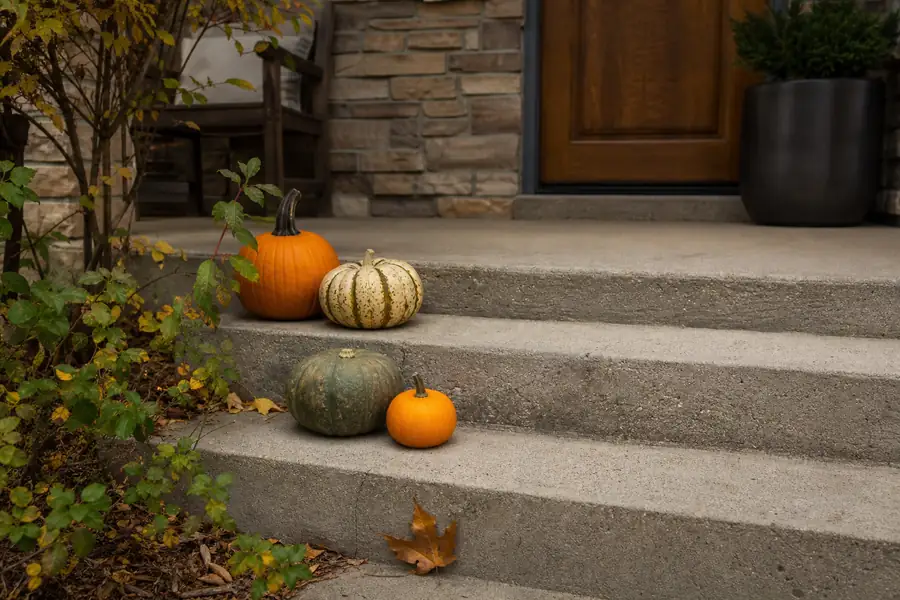
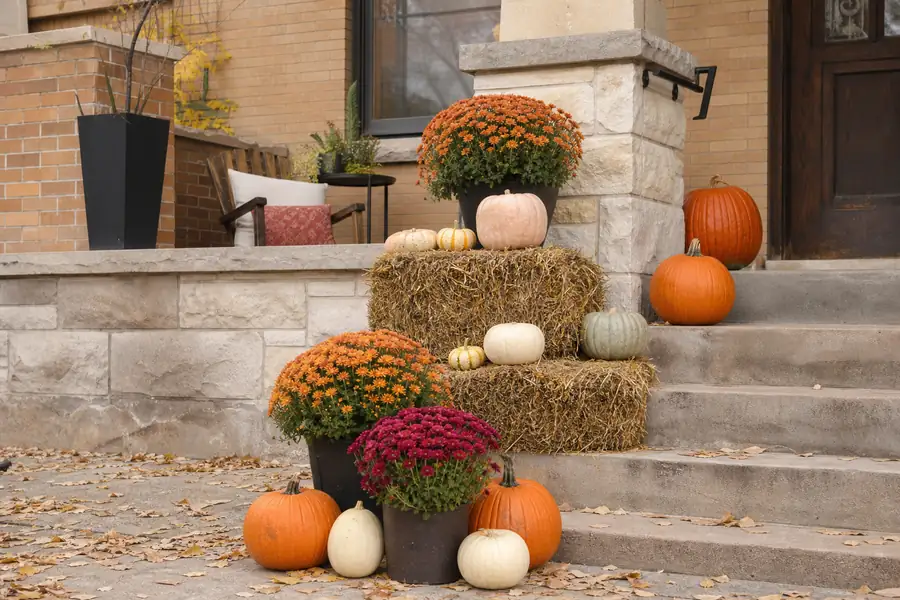
Black window frames, a concrete stoop, maybe one steel planter. That's most modern entries in Boulder County, and orange pumpkins read as an accent color dropped into a house that only has two or three colors to begin with. If that's bothering you every October, you don't have to fight it. A neutral pumpkin palette solves the problem completely, and it's a real swap we build all season, not a special request.
This is a build guide, not a mood board. Named varieties, real proportions, and where each pumpkin goes on the steps.
- Orange clashes with black, white, charcoal and warm wood because those houses run on restraint, and orange is the loudest color on the porch.
- Four pumpkins carry a neutral build: Lumina, Jarrahdale, Porcelain Doll and a green warted heirloom used sparingly.
- Proportions matter more than variety count: roughly half white, a quarter blue gray, the rest blush and green.
- Mass pumpkins in odd groups by the steps instead of scattering them evenly across the porch.
- The neutral swap adds $75 to any package. Everything else, delivery, design and setup, stays the same.
Why orange fights a modern house
Orange reads as an accent color, and a modern entry usually only has two or three colors to work with in the first place: black trim, white or gray siding, concrete, maybe warm wood on a door. Drop a pile of orange pumpkins on that porch and it becomes the loudest object in the composition, which is rarely the effect the owner wants.
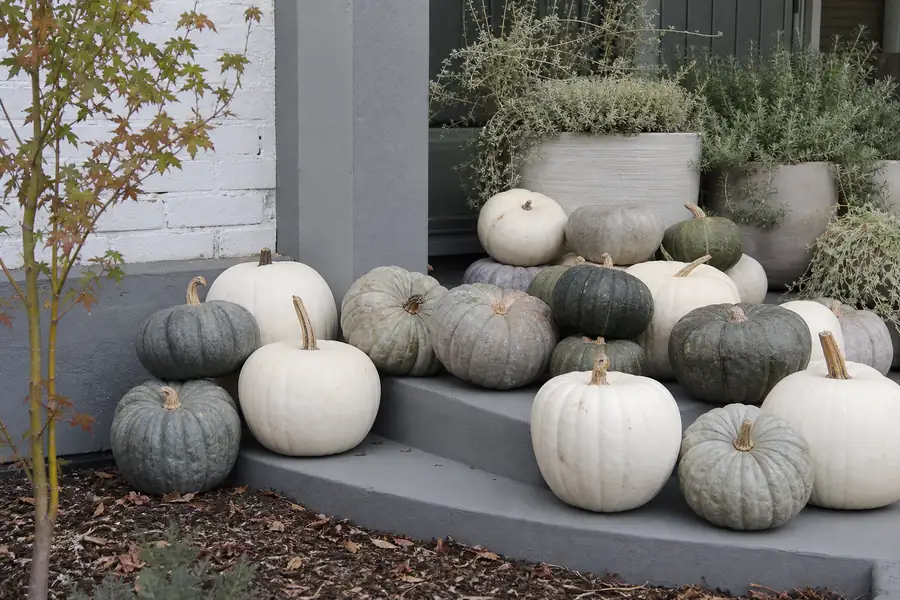
Dropping orange entirely is a legitimate design choice, not a compromise. We swap any package to an all-heirloom palette of whites, sage, blush and blue gray for $75 on top of the base price. Nothing else about the delivery or the build changes.
The four pumpkins that carry a neutral display
A no-orange porch runs on four pumpkins, each doing a different job.
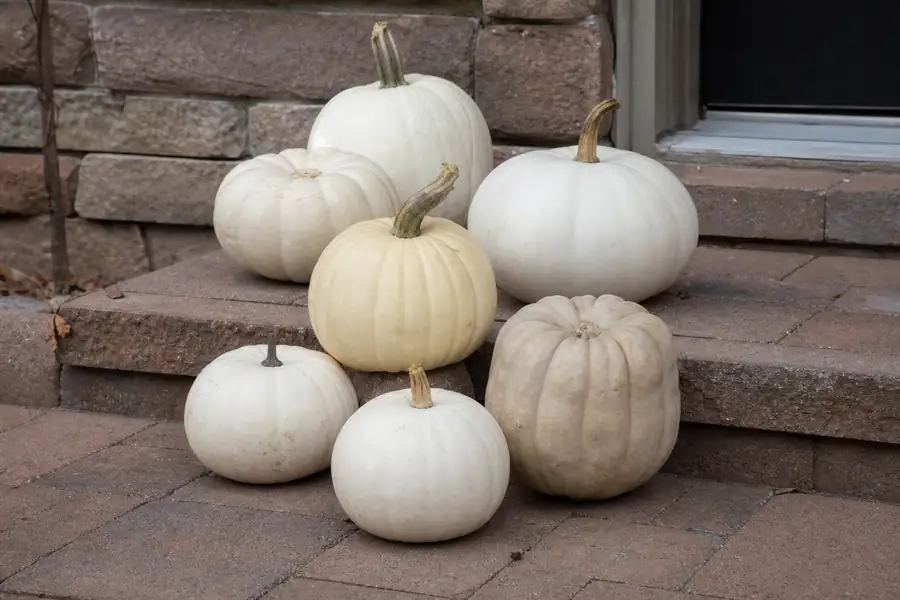
White Ghost, sold as Lumina, is chalk white with almost no ribbing. It's the highest-contrast object you can put against black trim or a dark door, and it does most of the visual work in a neutral build.
Jarrahdale is blue gray, heavily ribbed, and has the hardest skin of any pumpkin we install. It's also the variety most likely to hold its shape and color from delivery day to Halloween, which matters on a Colorado porch that swings from 70 degree afternoons to a hard frost overnight.
Porcelain Doll is soft pink up close, but from the sidewalk it reads as pale peach, which softens the contrast between the whites and the concrete. It's also the variety that shows wear first: expect it to dull and soften a bit before the others do, especially after a few freeze-thaw cycles.
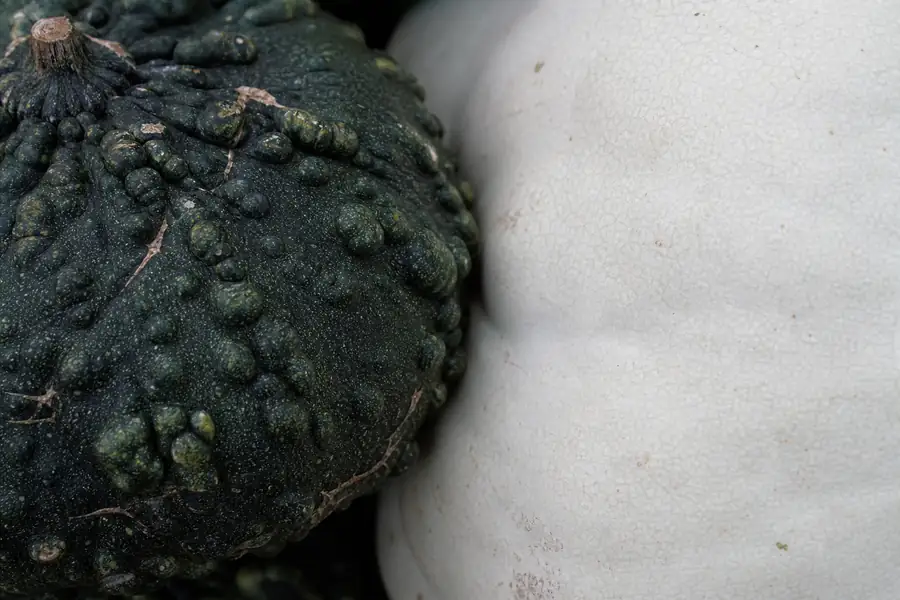
A green warted heirloom earns a spot or two, no more. One or two per display gives the eye somewhere to land without turning the porch into a pumpkin patch. These are the varieties we install on almost every neutral job, and it's worth comparing skin, size and color there before you commit to a palette.
Proportions and counts for a minimalist fall porch
A neutral, minimalist fall porch holds together when the proportions are roughly fixed: about 50 percent white, 25 percent blue gray, 15 percent blush and 10 percent green pumpkins and gourds. Skew much past that and the display either goes flat and all-white or starts to look patchy.
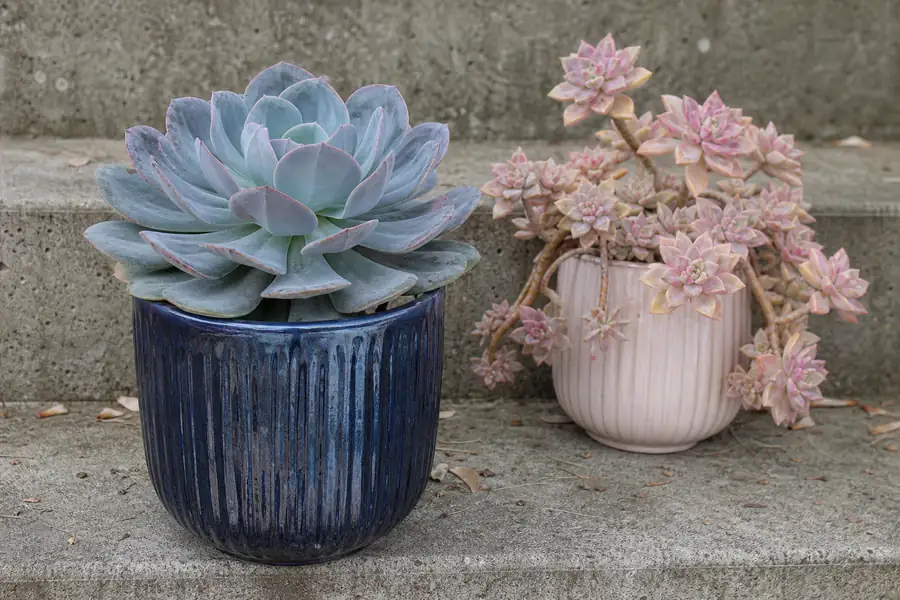
Counts hold the same whether you go orange or neutral. The Little package runs 18 to 20 pumpkins, Full runs 30 to 35 plus two hay bales, and Fairy Tale runs 50 to 60 plus two hay bales. Those are ranges because the Colorado harvest shifts from week to week, and whatever your count lands on, you always get at least the lower number in the range. Our guide on how many pumpkins you actually need for a front porch walks through counts by porch width and step depth if you want more detail before choosing a size.
| Package | Pumpkin count | Extras included |
|---|---|---|
| Little | 18 to 20 | None |
| Full | 30 to 35 | 2 hay bales |
| Fairy Tale | 50 to 60 | 2 hay bales |
Mass it, do not scatter it
A neutral display works best massed, not spread evenly across the porch. Put the biggest pumpkins at the base of the steps, where they anchor the whole composition and read from the street.
Group in odd numbers, threes and fives, and let three different sizes touch each other rather than lining them up in a row. Nothing gets centered on a single tread; centered objects look staged, and a modern porch is supposed to look built, not decorated at.
One flat, lobed Cinderella pumpkin does more for a step than three round pumpkins stacked beside it, because the flat top gives you a place to rest a smaller pumpkin on top without it rolling. Once the pumpkins are placed, fill the gaps last: sage, eucalyptus and small ornamental gourds tuck into the low spots and keep the eye moving without adding another pumpkin.
What a no-orange porch costs
The Little package runs $350 delivered and styled. The Full package runs $695 and adds two hay bales. The Fairy Tale package runs $1,200 and also includes two hay bales.
The neutral swap, all heirloom whites, sage, blush and blue gray instead of the standard mixed palette, adds $75 to any package. Extra hay bales run $25 each. There's no separate design fee: delivery, layout and installation are all built into the price.
Delivery is included for Boulder itself and the rest of Boulder County. Denver metro adds $100, which covers Denver, Arvada, Westminster, Golden, Wheat Ridge, Thornton and Littleton.
Build order for a contemporary entry
We build a neutral porch in the same sequence every time, because the order keeps the display from tipping over into clutter.
- Hay bales go down first, set against the wall or the rail, never in the walking path.
- Jumbo and large pumpkins go next, placed at the base of the steps and anchoring each grouping.
- Medium pumpkins fill in around the large ones, still grouped in odd numbers.
- Lumina, the White Ghost variety, goes in last among the pumpkins, placed where it catches the most light and contrast against the door or trim.
- Pie pumpkins step down in size toward the top of the steps or the edges of a grouping.
- Minis and small gourds go into the leftover gaps at the very end, along with any sage or eucalyptus.
FAQs
Can you do a fall porch with no orange at all?
Yes. We build all-heirloom displays using White Ghost, Jarrahdale, Porcelain Doll and green warted pumpkins with no orange varieties at all. The swap adds $75 to whichever package size you choose, and every other part of the delivery and setup stays the same.
Which white pumpkin lasts longest outside?
Jarrahdale, which is technically blue gray rather than pure white, typically holds up best through a full Colorado season because its skin is thicker and more resistant to bruising and softening. Porcelain Doll tends to soften first, especially after a hard frost, while Lumina holds its shape well but shows dirt and scuffs more visibly since it has no dark skin to hide them.
How many pumpkins does a modern porch need?
Most porches work well with the same counts we use for any style: 18 to 20 pumpkins for a small entry, 30 to 35 for a full-width porch, or 50 to 60 for a large wraparound. The palette changes the look, not the count, so a modern porch needs the same volume of pumpkins as a traditional one, just in different colors.
Do neutral pumpkins cost more?
Yes, by a fixed $75 added to your package price, not by variety. Whites, blue grays and blush pumpkins cost the same to source as orange ones; the $75 covers the extra sorting and substitution work required to build an all-heirloom load instead of a mixed one.