Two front door planters on the steps carried the summer annuals until they gave out in September. Swapping them for fall planters for front porch color takes about an hour per pot, and the trick is treating the pots and the pumpkins as one display instead of two. We build it this way on porches across Boulder County every fall, so here is the system.
- Thriller, filler and spiller still works in fall, just with different plants.
- A planter under about 16 inches tall gets lost next to a pumpkin display.
- Pumpkins belong set into the soil at the rim, not propped beside the pot.
- Rust, gold and burgundy mums pair with white, heirloom and blue gray pumpkins.
- Fall containers dry out fast, so check soil every one to two days.
Thriller, Filler and Spiller for an Autumn Container Garden
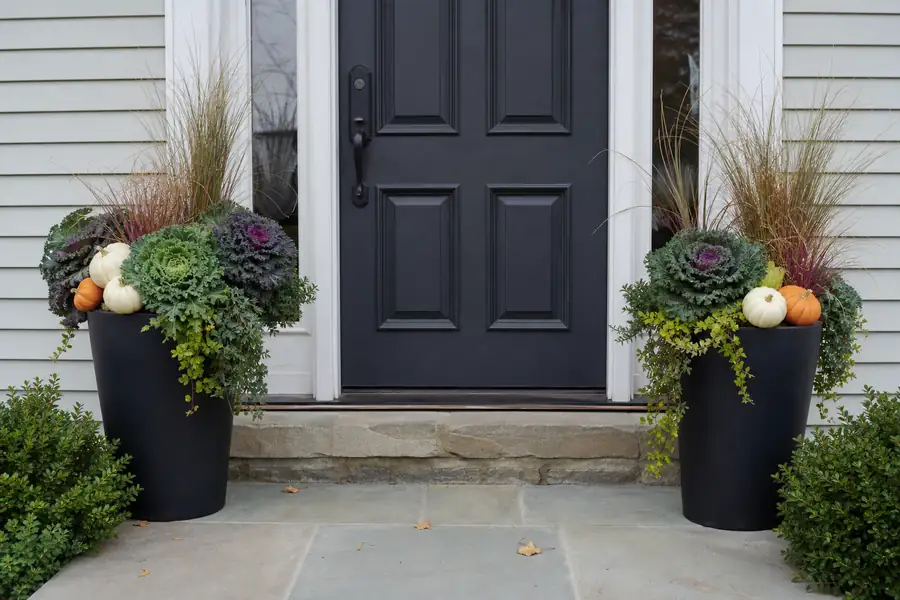
Thriller, filler and spiller is the same planter formula from summer, and it carries straight into an autumn container garden with a plant swap, not a redesign.
The thriller gives height: ornamental grasses or a bundle of three to five cornstalks tied at the base, standing roughly 1.5 to 2 times the pot's height, set toward the back.
The filler fills the middle. Hardy mums, ornamental kale or cabbage, and asters all work, with kale holding its ruffled shape longest through frost.
The spiller trails the rim. Creeping jenny keeps its color into fall, ivy holds up better to wind, and dusty miller adds a silvery edge against darker mums.
Pot Size and Scale for a Fall Planter
A planter under about 16 inches tall disappears once pumpkins show up next to it, so size the pot to the whole display, not just the porch.
The two pots flanking your door do not need to match in style or color, but they should match in height. Mismatched heights read as uneven no matter how well the plants inside are done.
Heavy pots matter more than people expect here. Front Range wind off the foothills can tip a light pot with a top-heavy grass thriller, so go with glazed ceramic, concrete, or a plastic pot weighted with gravel.
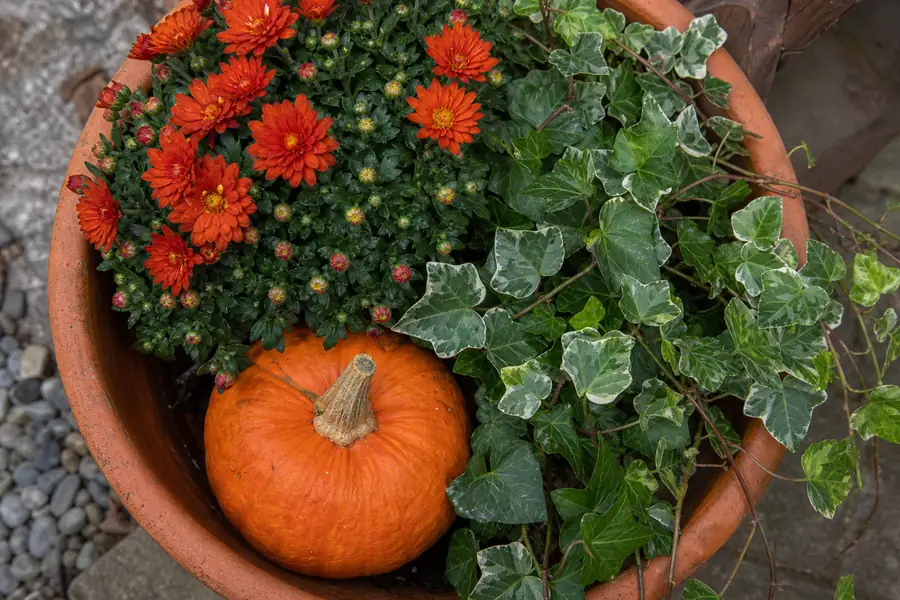
Sit Pumpkins Into the Planter, Not Beside It
Pumpkins read as part of the arrangement only when they sit in the pot, not lined up on the step next to it.
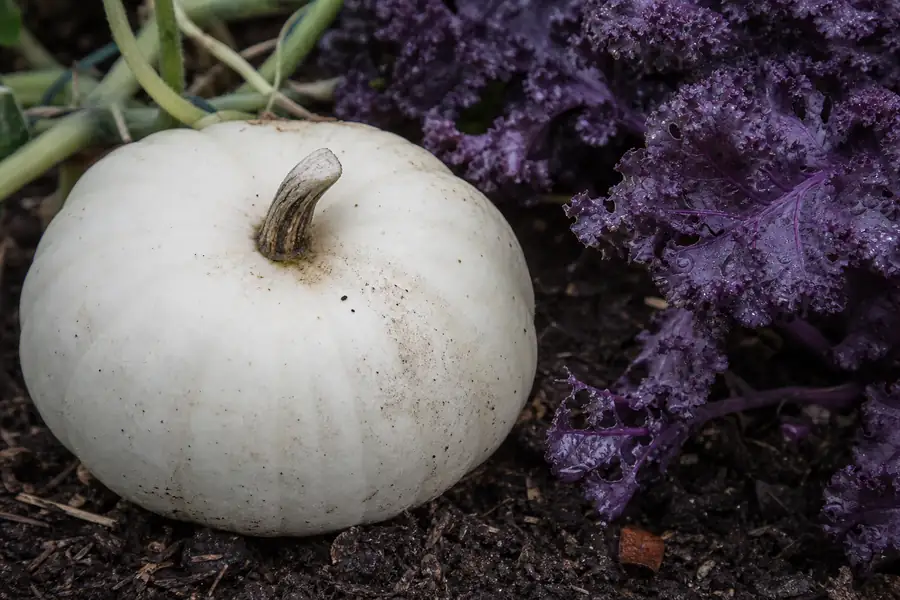
Set a 6 to 8 inch pie pumpkin on the soil at the front rim, nested between the filler plants. A White Ghost pumpkin rests well against green kale, since the pale skin pops against the darker leaves. A blue gray Jarrahdale works best low, at the base of the pot, anchoring the container instead of competing with the thriller above.
Do not perch a pumpkin on the top center. It blocks the thriller, looks precarious, and will roll the first time a gust comes through.
Color Pairing for Pots and Pumpkins
Rust mums against white pumpkins is the pairing that works hardest for us, since the warm rust and the cool white read as deliberate rather than random.
Gold mums sit better with heirloom varieties, picking up the orange and tan mottling already there. Deep burgundy mums look strongest against a blue gray Jarrahdale, where the contrast reads almost purple next to the pumpkin's cool skin.
If you want a potted mum rather than loose stems, we offer a $35 add-on mum in rust, gold or deep burgundy, picked the morning of delivery so the shade is whatever looks best that week. No package includes it by default, and we never promise a specific color ahead of time since the mums come from whatever is freshest. For more on pairing the two, see our guide to mums and pumpkins done right.
Watering, Rot and Frost in a Fall Planter
Containers dry out fast in September sun, so check every planter every one to two days rather than on a weekly schedule.
A pumpkin left sitting on wet potting soil softens at the point of contact within about a week, and that soft spot stays hidden underneath until you lift the pumpkin and find the rot has already set in. Set it on a flat stone or a wood shim instead, and the contact point stays dry.
In most Front Range years the first hard frost lands somewhere between late September and mid October, though the exact date moves year to year. Hardy mums, ornamental kale and pansies all tolerate a light frost without damage, which is part of why they work so well here. Colorado State University Extension tracks typical frost timing for the region if you want this year's outlook, and our own breakdown covers what frost actually does to a pumpkin.
Pots as Part of a Full Porch Display
Two planters and a pumpkin pile read as one display when the pots anchor the outer edges and the pumpkins bridge the gap between the pot base and the step.
Our Enchantment package delivers 30 to 35 pumpkins plus 2 hay bales for $720, built around the real shape of your steps and tucked up against whatever planters are already there. If your steps already handle two full planters, this is usually the package that reads as finished without looking crowded, whether you are in Boulder, Louisville, or Niwot.
If the planters are the whole project this fall and the steps need more than two pots can carry, a full porch display fills in the rest without you touching a shovel.
FAQs
What plants last longest in fall planters in Colorado?
Hardy mums, ornamental kale and pansies last longest in Front Range fall planters because all three tolerate a light frost without wilting. Ornamental grasses used as a thriller stay structurally sound well into November too, even after their color fades. None of these plants are reliably winter hardy here, so plan to replant again in spring.
Should both porch planters match?
They do not need to match in pot style, color or plant mix, but they should match in height. Two planters of different heights read as uneven even when the plantings inside are both well done.
Can I put a pumpkin in a planter without killing the plants?
Yes, as long as it sits toward the front rim rather than on top of the center plants. A pumpkin resting on damp soil can soften at the point of contact over time, so set it on a flat stone or shim and it will not harm the plants underneath.
When should I swap summer annuals for fall?
Most Front Range gardeners switch over in mid to late September, once nighttime temperatures start dropping and summer annuals stop blooming well. Fall plants like mums and kale can go in a few weeks before the first frost since they tolerate cold better than summer annuals do.