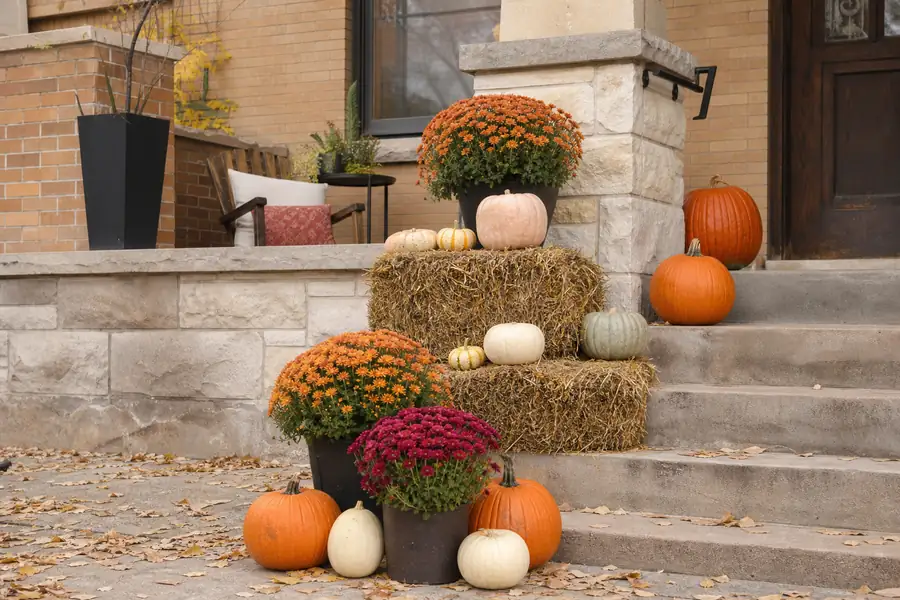
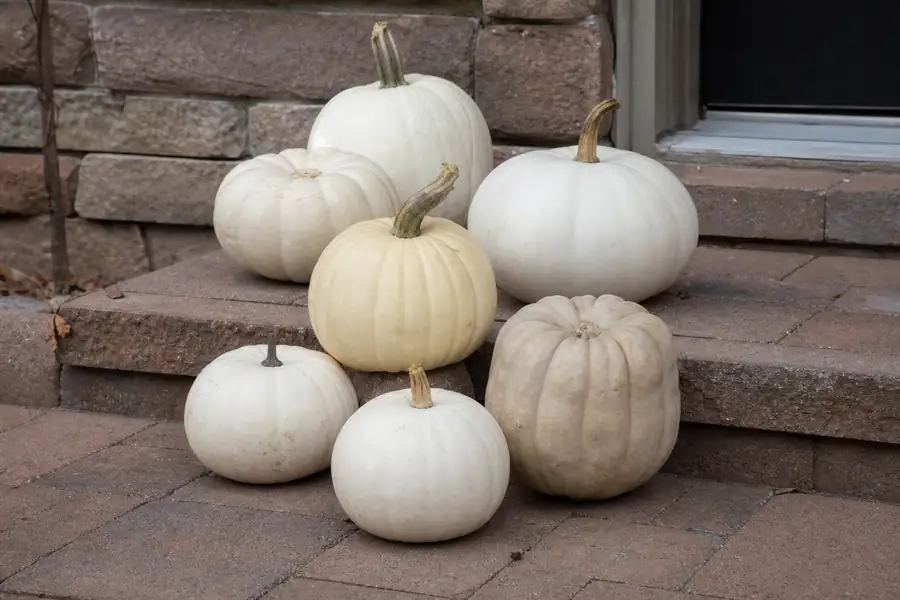
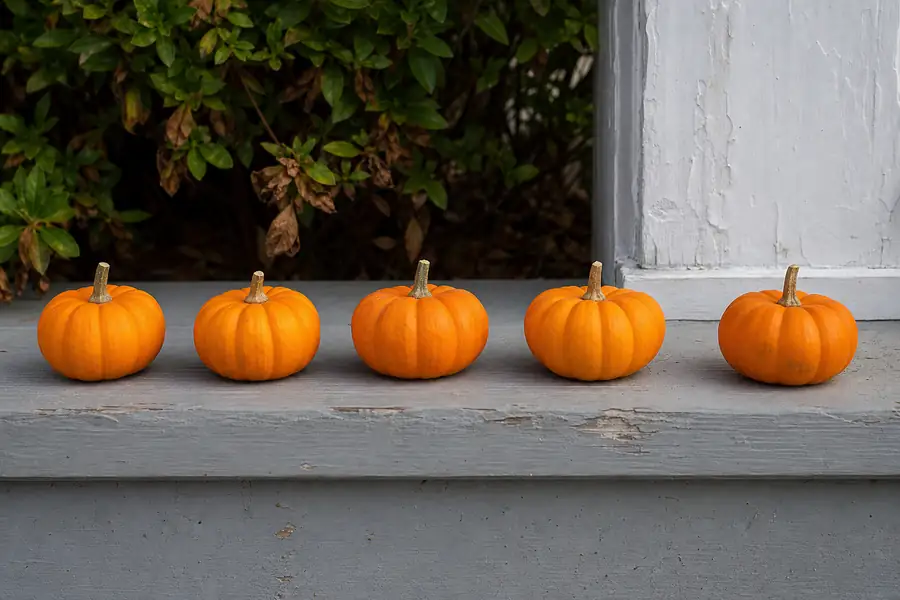
Most porches end up with pumpkins lined up in a row, all facing the door, biggest one dead center. It looks fine from six feet away and flat from the sidewalk. A few changes, how many pumpkins you group together, where the biggest one sits, how sizes step down as you climb, change how the whole porch reads from the street.
- Group pumpkins in odd numbers (3, 5, 7) instead of even pairs.
- Build a size ladder: biggest pumpkins low, smallest ones near the top step or door.
- Keep the biggest pumpkin off-center so it doesn't stop the eye.
- Use railings and planters to extend the display, not just fill the steps.
- Check the display from the curb before calling it finished.
Why Odd Numbers Work Better for Pumpkins on Porch Steps
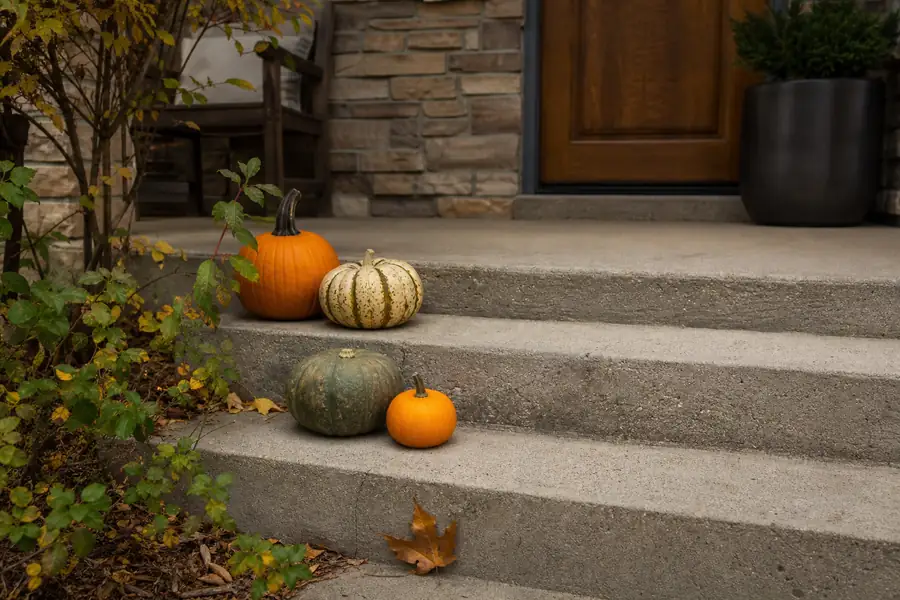
Odd numbers of pumpkins on porch steps read as an arrangement. Even numbers read as leftovers lined up. The eye naturally groups odd numbers around a middle point, so a cluster of three or five looks composed even if the pumpkins are just sitting there. A cluster of two or four looks like it got split down the middle and forgot to finish.
Work in threes on a single step, fives across two steps, and sevens if you have a full flight plus a landing. Our Full package runs 30 to 35 pumpkins, which is enough to break into three or four separate odd-numbered clusters spread across the steps, the railing, and a planter or two, instead of one long undifferentiated pile.
Building a Size Ladder for Pumpkins on Porch Steps
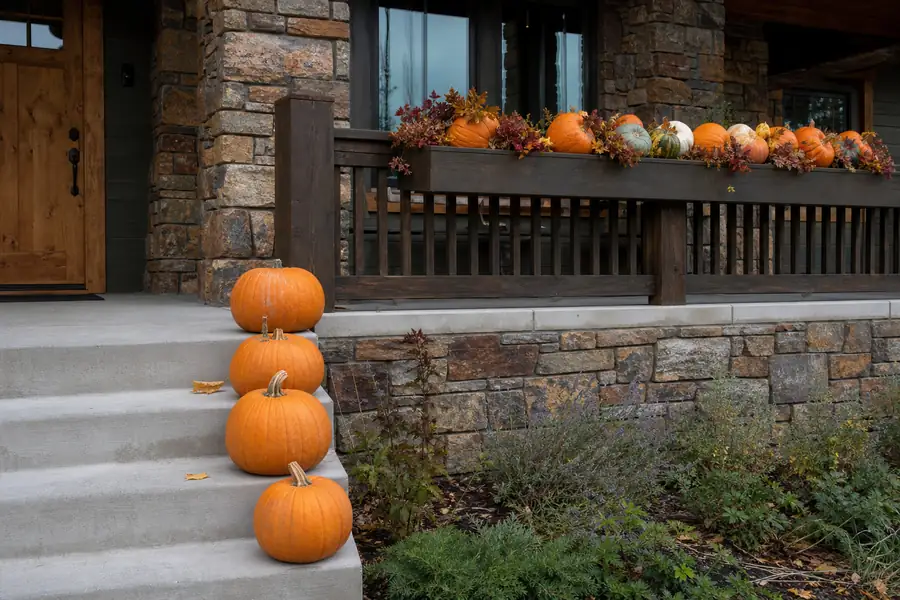
A size ladder puts the biggest pumpkins on the bottom step and the smallest ones at the top, so the display gets lighter as it climbs toward the door. That's the opposite of what most people do by instinct, which is to save the biggest pumpkin for the top step like a trophy.
A working ladder for a typical three or four step Front Range porch looks like 18 to 20 inch pumpkins at the bottom, 10 to 12 inch pumpkins on the middle steps, and minis or small gourds tucked at the top near the door. If you're not sure how many pumpkins a given set of steps actually needs, we've broken the math down by step count and porch width in how many pumpkins for a front porch.
Why the Biggest Pumpkin Doesn't Go in the Middle
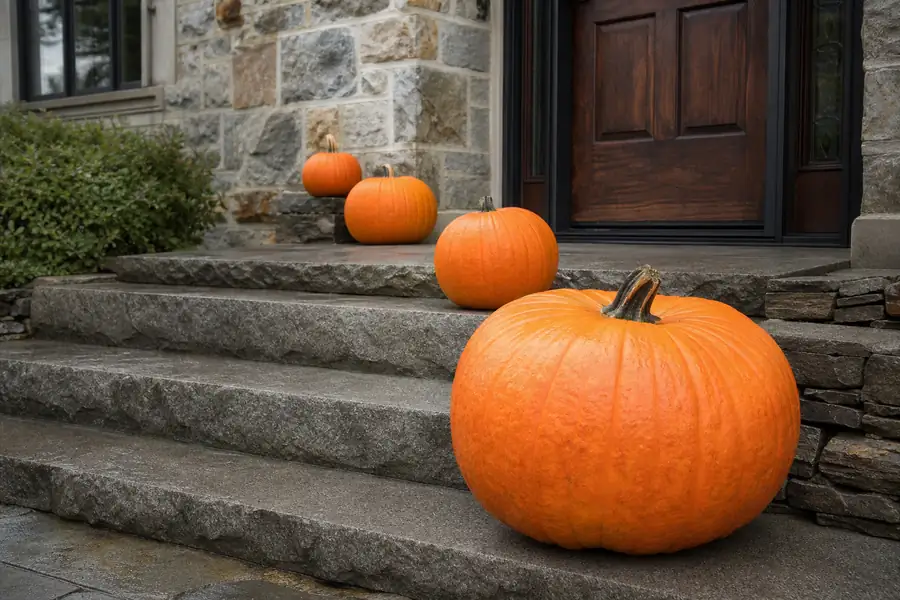
The biggest pumpkin on the steps shouldn't sit in the center of the display, because it stops the eye there instead of carrying it up or across the steps. Center placement acts like a full stop in the middle of a sentence. Put that same pumpkin at one end, or slightly off-center, and it becomes a starting point instead of a wall.
There's a practical reason too. Step corners and step edges are flatter and more stable than the middle of a tread, which matters when a downslope wind event rolls through in October. We cover how to keep an arrangement in place through that kind of wind in wind-proof fall porch decor. Heavier pumpkins anchored at the ends and corners are simply less likely to end up in the yard.
Styling Railings and Planters to Match the Steps
Railings and planters aren't separate from the steps, they're the next size down in the same size ladder. Minis and small gourds sit naturally along a railing cap or newel post, echoing the smaller pumpkins already near the top step. Planters at the base take a mid-size pumpkin or two, often paired with mums, which fills in color at ground level without competing with the steps above.
We build this same ladder on porches from Boulder to Longmont to Denver, adjusting the ratio of steps to railing to planter depending on how much railing a house actually has. A narrow railing gets two or three minis, not a row of them.
How to Read Your Pumpkins on Porch Steps Display From the Street
The only real test for a pumpkins on porch steps display is standing at the curb and looking back, not standing on the porch admiring it up close. Walk to the sidewalk or the end of the driveway and check the silhouette: does one end look heavier than the other, is there a gap that reads as a hole, does the biggest pumpkin actually anchor something.
Check color balance from that same distance. An all-orange display can look like a single orange smear from thirty feet away, while a mix of orange, white, and a few darker green or blue-gray pumpkins holds its shape. Do the walk-back check again once porch lights are on in the evening, since shadows change which pumpkins read as the anchors.
We build every arrangement on-site, from the smaller Little package up through the Fairy Tale package, so the steps look finished the same afternoon we deliver, not a stack of pumpkins waiting by the door for someone to get around to it.
FAQs
How many pumpkins do I need for porch steps?
Most three or four step porches look full and intentional with somewhere between 8 and 15 pumpkins split across the steps, railing, and any planters, using odd-numbered clusters rather than one long row. Wider porches or those with a landing can use more without looking crowded.
Should pumpkins on steps all face the same direction?
No. Turning stems at slightly different angles and letting a few pumpkins sit on their sides looks more natural than lining every stem up like soldiers, and it also gives you more flexibility in fitting odd-numbered groups onto uneven step widths.
What size pumpkins work best on narrow steps?
Narrow steps, roughly under three feet wide, generally hold their shape better with mid-size pumpkins in the 8 to 10 inch range rather than giants, since large pumpkins on a narrow tread can look like they're about to roll off. Save the biggest pumpkins for a wide bottom step or the ground at the base of the stairs.
Can I mix pumpkins with mums and gourds on the steps?
Yes, and mixing textures usually improves the display rather than cluttering it. Small gourds fill gaps between larger pumpkins, and a mum or two at the base of the steps or in a planter adds color low down without competing with the pumpkins above it.
Do pumpkins on steps need to be replaced during the season?
Whole, uncarved pumpkins generally hold up through most of the fall season if they aren't sitting in standing water, though hard frosts and hail can soften them earlier. We don't offer a removal service, but we do offer re-staging after wind or snow if the arrangement gets knocked around partway through October.