A toddler does not need scissors, glue or a knife to have a good time with a pumpkin. Three setups, each under five minutes to prepare, cover scooping, painting and sticking, the three moves most eighteen month to four year olds actually want to repeat. Anything that calls for a blade, a paint pen or a glue gun belongs in the posts written for older kids, not this one.
Here is what to set up, what to skip, and how long each activity realistically holds a short attention span.
- Keep an adult within arm's reach for the whole activity.
- Nothing used should be smaller than about 1.25 inches across, the small parts rule of thumb.
- Raw pumpkin seeds are choking sized and stay out of a toddler's hands entirely.
- Washable paint, dot markers and paint sticks dry fast and need no brush or water.
- A cut pumpkin softens in three to ten days, so time gut play near the end of its life.
Safety boundaries for pumpkin crafts with toddlers
Set the boundaries before the pumpkin comes out, not after. An adult stays within arm's reach for every activity on this list, because a child this age still mouths things without warning.
Nothing in the activity should be smaller than roughly 1.25 inches across. That is the small parts rule of thumb that toy safety standards use to flag choke hazards, and it applies just as well to craft pieces. Raw pumpkin seeds fail that test badly: keep them in a bowl out of reach, not in a toddler's hands, even though they look harmless.
No knives, scissors or glue guns at this age, full stop. Those tasks live in the posts written for older kids, and at eighteen months to four years they are not worth the risk for the payoff. Before any craft starts, wash the pumpkin in warm soapy water. Field pumpkins arrive dirty, straight off the vine, and a quick rinse keeps dirt out of small hands and off the floor.
Sensory play with pumpkin guts
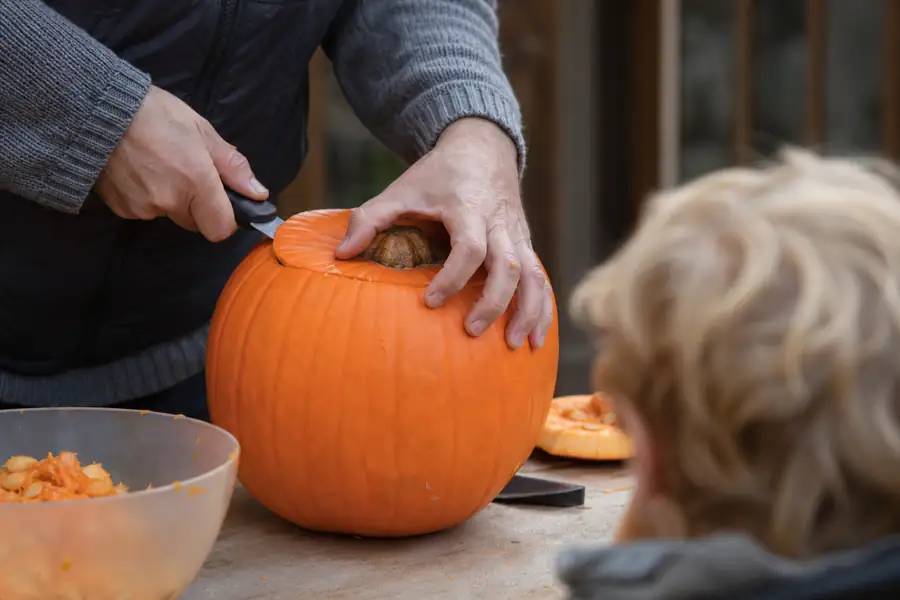
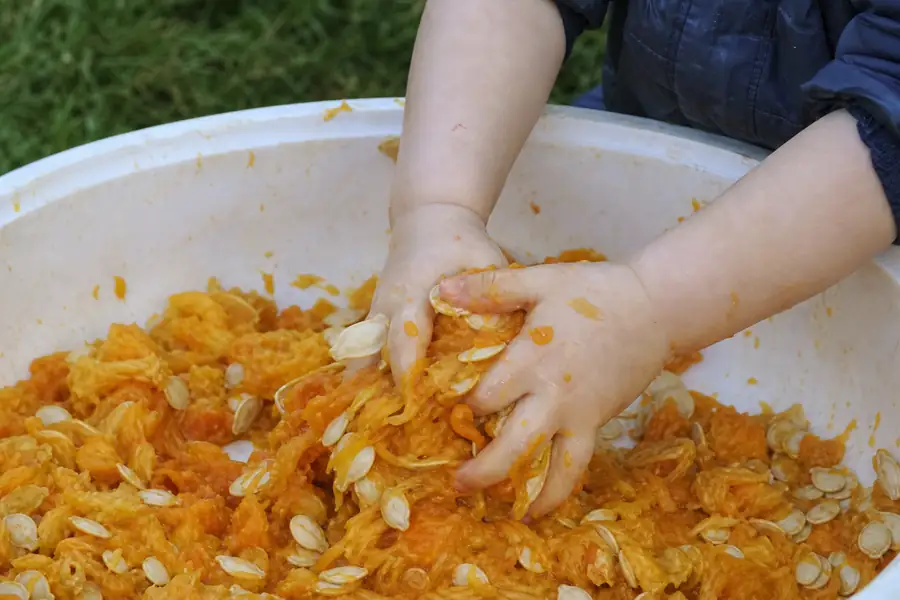
Pumpkin gut play works as a short, loud, messy activity that most toddlers settle into for five to fifteen minutes. An adult cuts the lid off, not the child, and scoops the stringy insides into a shallow tray set out on the grass or a towel.
From there the child takes over. Scooping with a kid-safe spoon is activity one. Pouring the guts between two cups or bowls is activity two, and it does more for fine motor control than it looks like it should, since little hands have to grip, tip and aim.
The pulp is sticky, not irritating, so a quick hand rinse after is enough. Plan the timing around how long pumpkins last outside once they are cut, since a scooped pumpkin on a warm porch can soften well before the end of the month.
Families who keep a few extra pumpkins around for exactly this kind of mess tend to do better than families working off a single porch display. The Charm package runs $375 for 18 to 20 pumpkins delivered and styled, which leaves plenty to spare for scooping without raiding the display your Boulder porch actually needs for curb appeal.
Mark making that dries fast
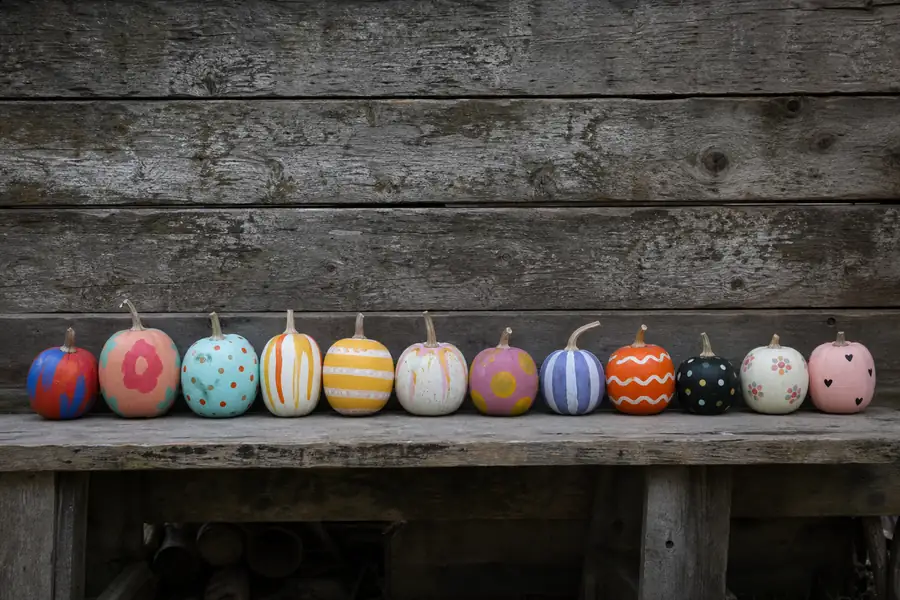
Mark making on a pumpkin works best when the medium dries before small hands wander off to something else. Tempera paint sticks are the fastest: dab or roll them on the skin and they set in 60 to 90 seconds with no drips.
Dot markers are activity four. They dry in two to three minutes, go on with almost no pressure, and are the closest thing to foolproof fine motor practice a pumpkin offers. Washable finger paint, applied straight with fingertips, is activity five: it beads up on the waxy skin rather than soaking in, which is exactly what you want for a short attention span.
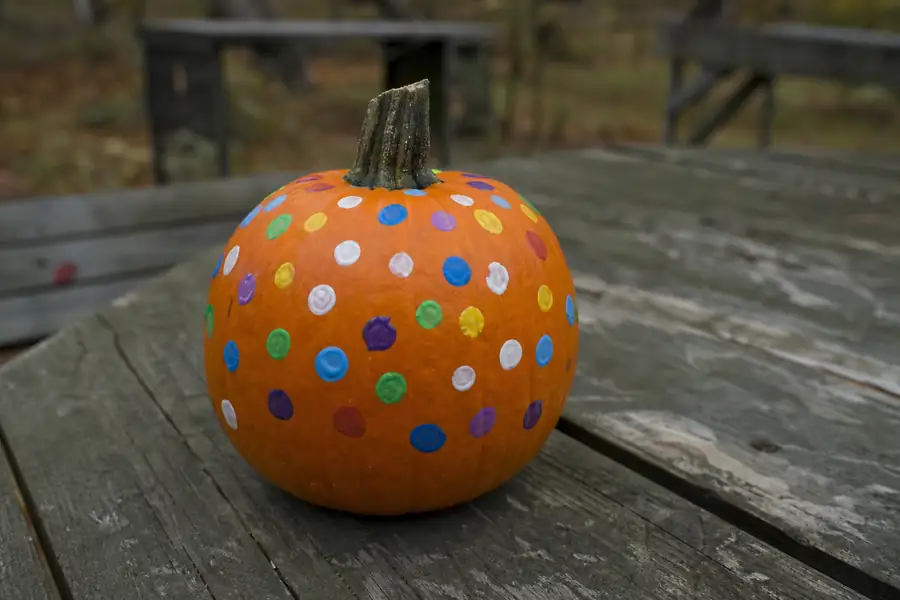
Washable paint will not bond permanently to a pumpkin's skin, and that is fine. It is meant to transfer a little onto hands, clothes and whatever it touches next, so plan for a smock rather than a surprise.
Sticking and stacking without glue or scissors
Sticking crafts give a toddler the satisfaction of decorating without any adhesive that needs opening, squeezing or cleaning up. Large stickers, the kind made for toddler craft kits, are activity six: press and done.
Wide tape stripes, laid down ahead of time by an adult, are activity seven. A child presses leaves or paper onto the sticky side, which is activity eight if you set up a piece of contact paper sticky side out on a mini pumpkin instead. Leaves and tissue paper stick with no glue at all.
For three and up, golf tees pushed into the soft top of a pumpkin with a small wooden mallet make activity nine, done hand over hand with an adult guiding the tap. Sorting mini pumpkins by color, straight from a mixed bin of pumpkin varieties, rounds things out as activity ten and needs nothing but the pumpkins themselves.
Timing pumpkin crafts for toddlers and what happens after
Plan for roughly two to three minutes of focus per year of age, so a two year old gets four to six minutes and a four year old gets eight to twelve. Set up the activity completely before you bring the child over, and stop while they still like it rather than waiting for them to lose interest on their own.
Minis are what toddlers reach for first, and they are also the first to soften once cut or scooped. A pumpkin that has been opened on a warm Boulder County porch can turn within a week, sooner in a sunny week, so treat gut play as a last-stop activity rather than something to repeat all month.
We are not trying to replace a trip to the patch. Picking a pumpkin is its own outing, and worth doing. Taking care of the porch display parents keep meaning to get to is the part we handle, so the mess stays contained to activities, not the whole front step.
FAQs
What crafts can a 2 year old do with a pumpkin?
A two year old can scoop pumpkin guts into a tray, dab a tempera paint stick or dot marker onto the skin, press large stickers on, or stick leaves onto a piece of contact paper wrapped sticky side out around a mini pumpkin. All of these skip glue, scissors and small pieces, and all need an adult within arm's reach the whole time.
Is pumpkin pulp safe for toddler sensory play?
Yes, pumpkin pulp is sticky rather than irritating, and most toddlers can handle it directly with a quick hand rinse afterward. The main risk is not the pulp itself but the raw seeds mixed into it, which are choking sized and should be kept out of a toddler's reach rather than handed over to play with.
What paint is safe for toddlers on a pumpkin?
Washable tempera paint sticks, washable finger paint, and dot markers are all good choices because they dry in under three minutes and were designed to wash out of fabric and off skin. None of them bond permanently to the pumpkin's skin, so expect some transfer onto hands and clothes, which is normal and part of why washable products exist.
Do I need a separate pumpkin for crafts and for the porch display?
It helps to keep a couple of spare pumpkins just for messy activities so the main display on the steps stays intact. Buying a larger set, like the Charm package with 18 to 20 pumpkins delivered and styled, gives enough spares for scooping and painting without touching the ones out front.
How long will a toddler stay interested in a pumpkin craft?
Expect roughly two to three minutes of focus for every year of age, so a two year old typically lasts four to six minutes and a four year old eight to twelve. Set everything up before the child arrives and end the activity while interest is still high rather than pushing past it.