Most fall porch decor falls flat for one reason: not enough volume for the distance people actually see it from. A porch gets read from the sidewalk or a slow-moving car, 30 to 50 feet out, not from the top step. What follows is the same method we use on hundreds of Front Range porches every season, in order, so you know what to buy and where it goes before you buy anything.
Key takeaways:
- Porches are viewed from 30 to 50 feet, so thin displays disappear at that range
- Measure your steps and planters before buying a single pumpkin
- One large anchor pumpkin, placed off center, does more work than three small ones
- Height comes from hay bales and flat, hard-skinned varieties, not round field pumpkins
- Odd-numbered groupings and repeated colors read as intentional instead of scattered
Why most fall front porch ideas look thin
Three pumpkins spaced across a 12 foot porch vanish at sidewalk distance. The human eye needs mass and repetition to register a display as full, not just present. This is the single biggest gap between a porch that looks styled and one that looks like someone set a few things down.
Volume is the fix, not variety. A dense cluster of pumpkins at the door reads clearly from the street. A handful spread thin along the railing does not, no matter how nice each pumpkin is up close.
Measure your porch before you buy for fall porch decor
Start with three numbers: usable width across the top landing, step count, and any fixed planter positions. These decide how many pumpkins you actually need, and guessing is where most autumn porch display budgets go wrong, either underbuying and leaving gaps or overbuying and running out of room.
As a baseline, a narrow single entry needs 18 to 20 pumpkins to look intentional. A standard porch with a landing and two or three steps runs 30 to 35 pumpkins plus two hay bales, which is the range our Enchantment package is built around: delivery, design and installation included for $720. A full house front, wrapping around a wider entry or double door, generally takes 50 to 60 pumpkins to avoid looking sparse.
Counts are always given as a range, never a single number, because pumpkin harvests from Colorado growers vary week to week. A shortage of one variety just means a substitution to the closest visual match, not a smaller display.
Pick an anchor pumpkin for your fall porch decor
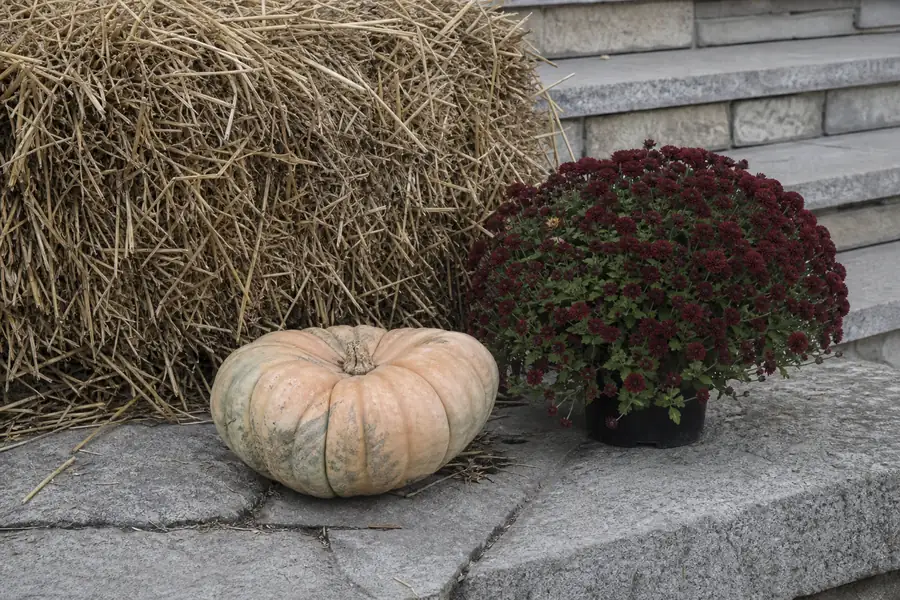
One large object, set off center, holds an entry better than several small ones spread evenly. This is the anchor, and it should go down first, before anything else on the porch.
A Cinderella pumpkin (also sold as Rouge Vif d'Etampes) is the classic anchor: flat, deeply lobed, burnt orange, and wide enough to fill a step corner on its own. For a genuine statement piece, a Grand Prize jumbo pumpkin runs close to 3 feet across and needs two people to carry it into place. Everything else in the display gets built around wherever the anchor lands, not the other way around.
Build height into your pumpkin display
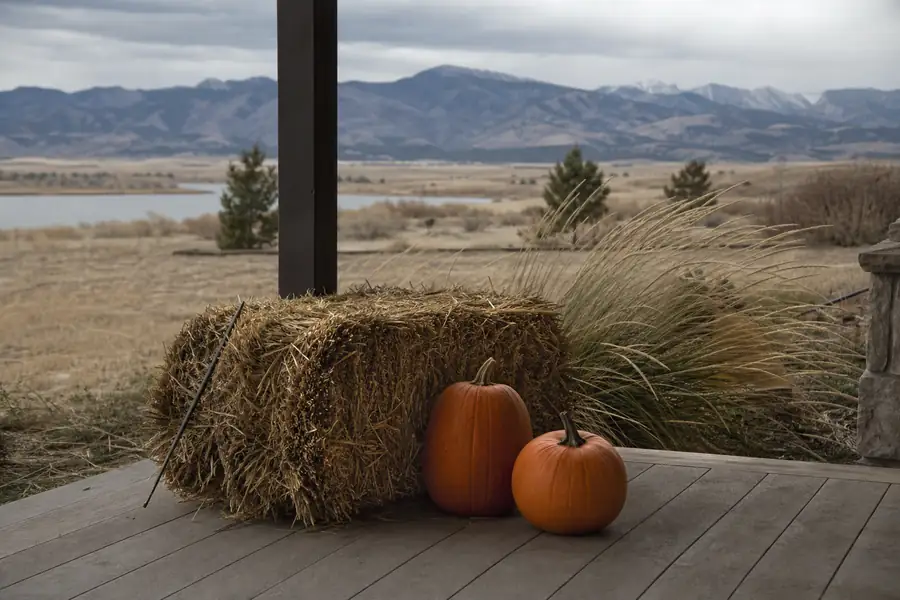
Hay bales set at roughly 18 inches give a fall porch decor display its first layer of height, and stacked pumpkins add a second. Crates work the same way if bales are not an option.
Not every pumpkin can go on top of another. Heirloom pumpkins like Cinderella and Jarrahdale sit flat and have hard, thick skin, so they stack cleanly. Round field pumpkins roll and slide off a bale within a day, usually after the first gust off the foothills. Keep stacking to the flat-sided varieties and use round pumpkins for ground-level fill instead.
Layer your fall front porch ideas in odd numbers
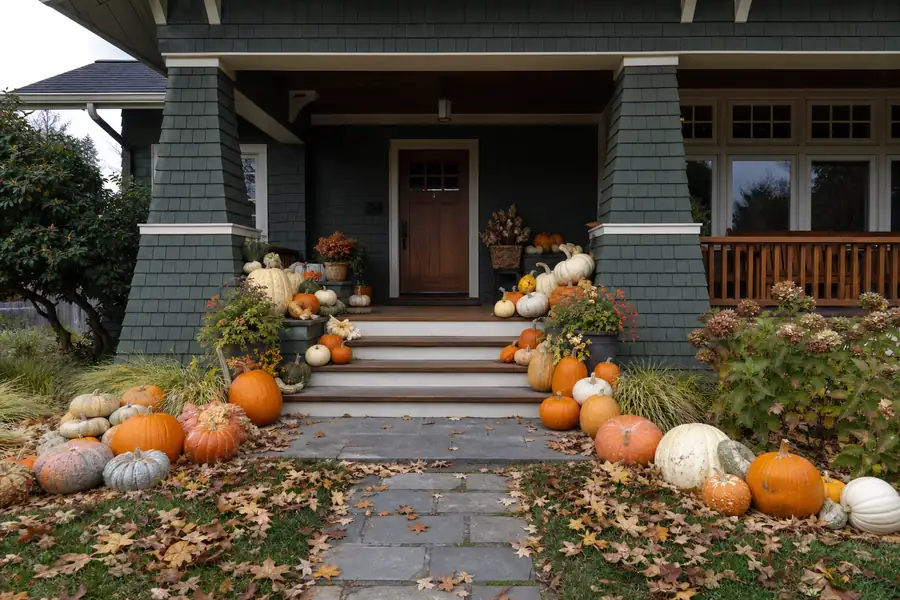
Groups of 3, 5 and 7 read as deliberate; groups of 2, 4 and 6 read as leftover. Densest cluster goes right at the door, thinning out as you move toward the steps and edges of the porch.
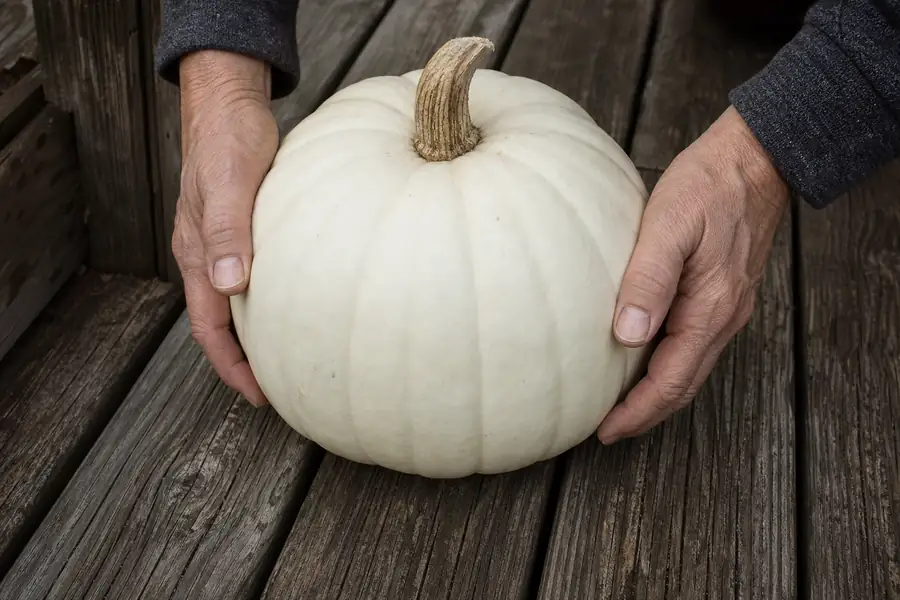
Repeat each color at least three times across the porch. A single white pumpkin next to a run of orange ones looks like a mistake. Three or more, spaced through the layout, reads as a color choice. This is also where ornamental gourds earn their keep, tucked into the gaps between larger pumpkins where a solid pumpkin would look too heavy.
Color that reads from the sidewalk
White Ghost pumpkins (sold as Lumina) are the highest-contrast item you can put on a fall porch decor display, chalk white with almost no ribbing, and they read clearly even from across the street. Jarrahdale pumpkins carry a blue-gray cast that pairs well against orange without competing with it. Porcelain Doll pumpkins are a pale peach that softens at distance rather than disappearing. Knucklehead pumpkins, covered in warts and bumps, add texture for anyone building a more rustic look.
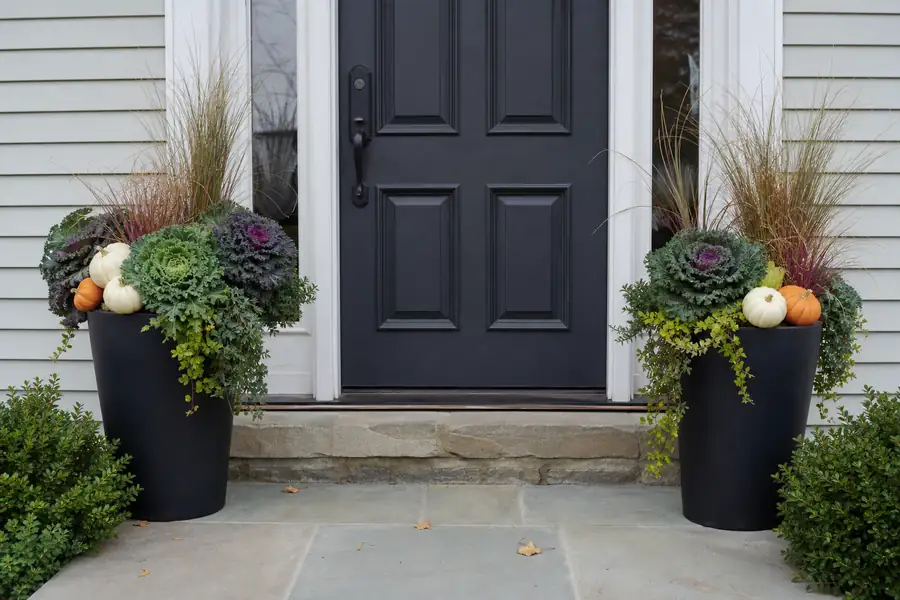
Potted mums round out the palette. Rust, gold and deep burgundy hold up better in Front Range sun than pale pastels, which bleach out fast at altitude.
Finish and weatherproof your autumn porch display
Every pumpkin should be seated on its flattest side before you consider the display done. An unseated pumpkin on a sloped step will roll off within the first stretch of wind, and downslope wind off the foothills is common through September and October.
Stake anything set above hay bale height. Anything left loose at that level is the first thing to go in a wind event, and Front Range wind events are frequent enough that skipping this step means a call-out later. Re-staking after wind and re-staging after an early snow are both services worth budgeting for if you want the display to hold for the full season; our guide on wind-proof fall porch decor covers staking and placement in more detail.
Keep pie pumpkins and thinner-skinned varieties out of direct sprinkler spray. Repeated soaking softens the skin fast and shortens how long they last outside. Gourds go in last, tucked into whatever gaps remain once the pumpkins and mums are set.
A full install like this typically takes about 90 minutes on site, built around the real steps and walkway rather than a generic layout, which is one reason counts and placement matter more than product choice. If you want the exact math for your own entry before you buy, our post on how many pumpkins you actually need for a front porch walks through it by porch size. We deliver to Boulder and Louisville porches all season using this same method.
FAQs
How many pumpkins do I need for a front porch?
A narrow single entry generally needs 18 to 20 pumpkins to look full, a standard porch with a landing needs 30 to 35 plus two hay bales, and a full house front runs 50 to 60. These are ranges because pumpkin harvests vary week to week, so exact counts shift slightly from year to year.
When should I decorate for fall in Colorado?
Late August through the first two weeks of September is typical for Front Range porches, ahead of hard frosts that usually arrive by mid to late October. Decorating early gives you the most weeks of use before the pumpkins start to soften.
How long do uncarved pumpkins last outside?
Uncarved pumpkins typically hold up for six to ten weeks outdoors in most Front Range years, longer in cool, dry stretches and shorter after a hard freeze or a run of warm, wet days. Hard-skinned heirloom varieties generally outlast round field pumpkins by a few weeks.
Do mums and pumpkins work together?
Yes, potted mums in rust, gold or deep burgundy are the standard finishing layer on a fall porch decor display, added after the pumpkins and hay bales are placed. They fill low gaps near the steps and soften the harder lines of stacked pumpkins.
What does a professional display cost?
Full-service porch packages in the Boulder County and Denver metro area typically run from about $375 for a small entry up to $1,225 for a full house front, with delivery, design and installation included. Add-ons like extra hay bales, mums or a jumbo pumpkin are priced separately.