Quick answer: A mum bought already covered in open flowers lasts about 2 to 4 weeks of good color. A mum bought mostly in tight bud, with just a hint of color showing, holds 4 to 6 weeks, longer if the fall stays cool. The stage it is in when you buy it matters more than anything you do afterward.
Garden mums, also called hardy chrysanthemums, show up everywhere from grocery pallets to greenhouses starting in early September. Most people buy the showiest pot on the table, the one already full of open blooms, then wonder why it is brown and crisp two weeks later. That is not bad luck or bad care. It is math. If you want layout ideas once you have the right plant, our guide to front porch fall mums covers arranging them with pumpkins.

The real number: how long do mums last in the fall
How long mums last in the fall depends almost entirely on what stage the buds were in the day you bought them, not the weather that follows. A pot already in full flower is partway through its bloom cycle already. A pot still mostly in tight bud has that whole cycle still ahead of it.
| Bloom stage at purchase | Typical color life |
|---|---|
| Full bloom, flowers already open | 2 to 4 weeks |
| Tight buds, just showing color | 4 to 6 weeks, longer in a cool fall |
That gap of a month or more is the entire reason to shop carefully instead of grabbing whatever pot looks fullest in the garden center aisle.
Why a full-flower mum is half spent
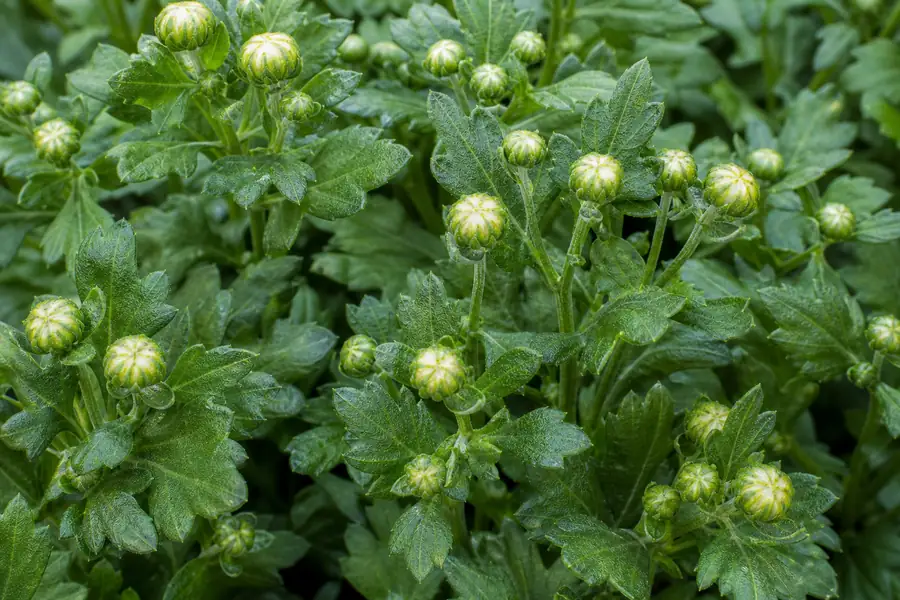
Buds on a mum open on a fixed internal schedule, so a plant covered in open blooms has already used up most of that schedule. The flowers you see today are not new growth, they are the plant's reserves cashing out. Look for these signs before you buy:
- Mostly tight buds, with only a few flowers open
- Dense foliage down to the soil line, no gaps
- No bare, woody stems showing through the leaves
- Soil that feels damp, not soggy or bone dry
A plant that passes all four checks still has weeks of color left in it. One that is already a solid dome of open flowers is closer to the end than the beginning, no matter how good it looks on the shelf.
Water kills more mums than cold does
Underwatering, not cold, is what finishes off most potted mums on Front Range porches. A root bound pot, meaning the roots have filled every inch of soil and started circling the container, can dry out in a single day once a September afternoon drops humidity down to 20 or 40 percent. Check the pot daily, either by its weight or with a finger pushed an inch into the soil.
Water at soil level until it runs out the drainage holes, never over the flowers and never left standing in a saucer. A mum can wilt and bounce back once or twice. Wilt it five times and it will not recover the same way again.
Sun and frost
Six hours of direct sun a day is fine for a potted mum, though afternoon shade in September actually holds the blooms longer by slowing them down. A light frost near 30 degrees Fahrenheit will brown open flowers even though the plant itself usually survives it. Cover the pot or slide it under an eave on those nights.
First frost on the Front Range typically lands somewhere between late September and mid October, whether your porch sits in Boulder, Longmont, or Denver. That window shifts year to year, so check current local frost records rather than planning around a fixed date. Colorado State University Extension keeps planting and frost guides specific to the Front Range if you want more detail than a single blog post can hold.
Deadheading keeps mums blooming longer
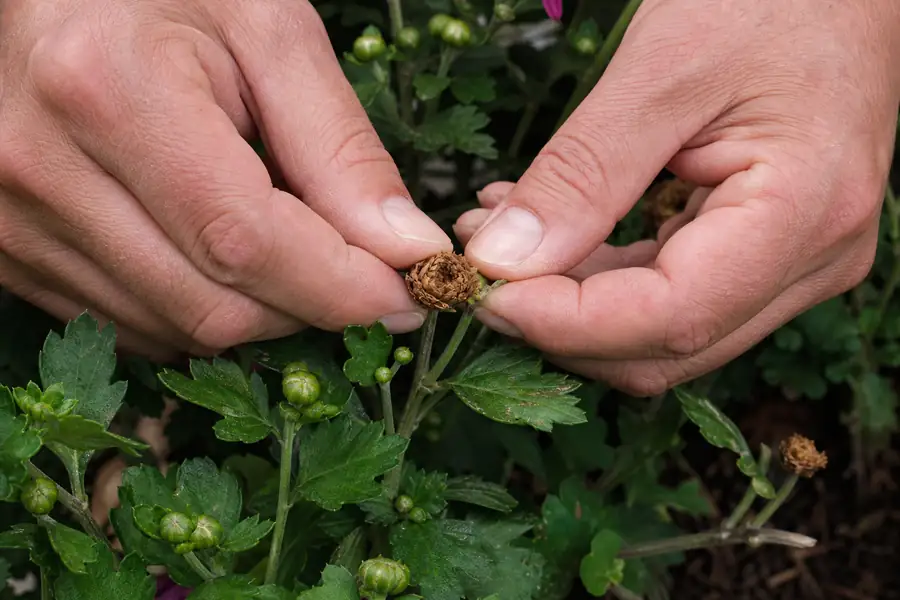
Deadheading, pinching off spent blooms just above the next leaf set, pushes a mum's energy into opening new buds instead of holding onto dead petals. Do this every few days as flowers fade, working around the whole plant.
Do not shear the plant down in October to tidy it up. A hard cut that late removes buds that have not opened yet and ends the show early for no reason.
Color next to pumpkins
Rust, gold, and deep burgundy mums sit well against orange field pumpkins and pale varieties like White Ghost, the kind covered in our Colorado pumpkin varieties field guide. Pink and lavender mums tend to fight with orange rather than complement it, so save those tones for a porch that is not pumpkin heavy.
We pick small potted mums, $35 each, the morning of delivery, in whatever color is freshest that week. We never promise a specific color because the growers' availability changes, and no package includes mums by default. We add them to any display including an Enchantment display at $720, where a few mums tucked among 30 to 35 pumpkins and hay bales fill in the gaps nicely.
Planting mums afterward
A mum planted in the ground in October rarely survives a Colorado winter because its roots do not have enough time to establish before the soil freezes. The plant looks hardy, but hardy in the name refers to cold tolerance while blooming, not guaranteed overwintering once the season turns. Mums planted in spring, with a full growing season ahead of them, do noticeably better.
Treat a fall potted mum as a seasonal plant, not a perennial you are installing. If it comes back next spring, that is a bonus, not something to count on.
FAQs
How long do mums last in the fall?
A mum bought in full bloom typically holds color for 2 to 4 weeks. One bought mostly in tight bud lasts 4 to 6 weeks, sometimes longer if the fall stays cool, because it still has most of its bloom cycle ahead of it at purchase.
Why are my mums dying so fast?
The most common reason is buying a plant that was already in full flower, which means most of its bloom cycle was already spent before it reached your porch. The second most common reason is underwatering, since a root bound pot can dry out in a single dry Colorado afternoon.
How often should you water potted mums?
Check the pot daily by lifting it or pushing a finger an inch into the soil, since a root bound mum can dry out in under 24 hours in low fall humidity. Water at soil level until it drains from the bottom, and never let the pot sit in a full saucer of standing water.
Can I plant my mums in the ground after they fade?
You can, but a mum planted in October rarely survives a Colorado winter because its roots do not have time to establish before the ground freezes. Mums planted in spring have a far better survival rate, so treat a fall-bought mum as a seasonal display plant rather than a guaranteed perennial.